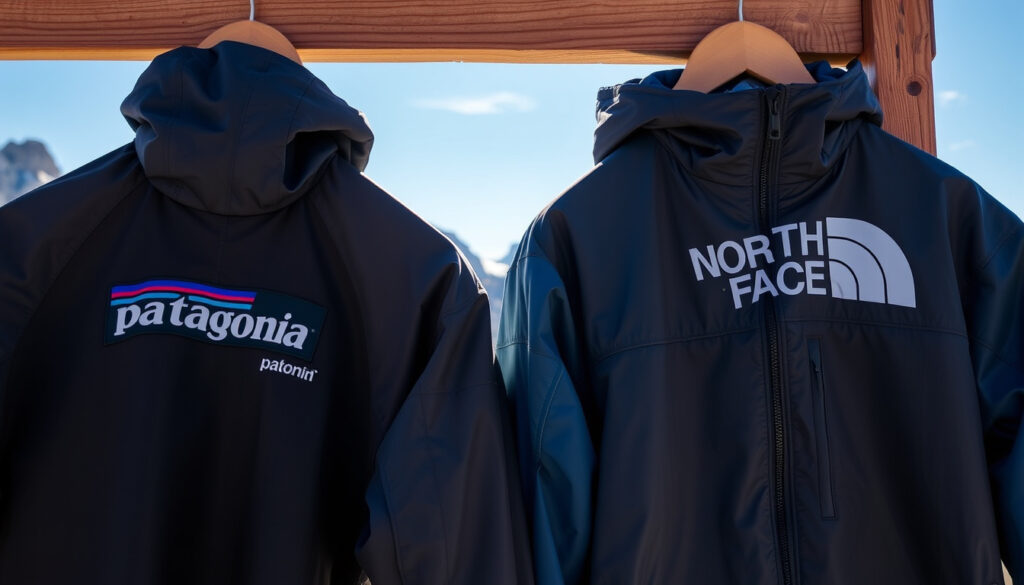
Patagonia Jacket: Why So Expensive? Worth It? vs North Face
There’s a reason people keep returning to Patagonia jackets despite the higher price tag. It’s not just the 800-fill down or the smart design — it’s the promise that your jacket will be repaired, not replaced, and that the company behind it donates 1% of sales to environmental causes. We’ll look at how Patagonia stacks up against North Face on warmth, price, and durability, and whether the extra cost actually pays off.
Founded: 1973 ·
Headquarters: Ventura, California, USA ·
Recycled Materials: Over 70% of products use recycled materials ·
Warranty: Ironclad Guarantee (repair or replace for life) ·
Environmental Commitment: 1% of sales donated to environmental causes since 1985
Quick snapshot
- Patagonia was founded in 1973 by Yvon Chouinard (Wikipedia)
- Patagonia donates 1% of sales to environmental causes (Patagonia Environmental Responsibility Programs)
- Patagonia’s Ironclad Guarantee offers free repairs for life (Patagonia Environmental & Social Footprint)
- Patagonia uses recycled polyester and organic cotton (Better Trail)
- Exact price difference between specific Patagonia and North Face models varies (Lectra)
- Warmth comparison depends on jacket type (down vs synthetic, fill weight) (Family Handyman)
- Patagonia committed to net zero emissions by 2040 (Patagonia Environmental Responsibility Programs)
- From Spring 2025, 100% of new styles made without intentionally added PFAS (Patagonia Environmental & Social Footprint)
- Patagonia continues to expand Fair Trade Certified™ production (Patagonia)
- North Face offers limited two-year warranty in UK, one-year in US (The North Face UK Warranty)
Here are the key facts about Patagonia at a glance.
| Attribute | Value |
|---|---|
| Founded | 1973 |
| Headquarters | Ventura, California, USA |
| Recycled Materials | Over 70% of products use recycled materials |
| Warranty | Ironclad Guarantee (repair or replace for life) |
| Environmental Commitment | 1% of sales donated to environmental causes since 1985 |
| Manufacturing | Fair Trade Certified™ sewn in multiple countries |
Why is the Patagonia jacket so expensive?
Patagonia jackets carry a premium that goes beyond the price tag. The company uses recycled materials and Fair Trade Certified™ labor — and its Ironclad Guarantee means free repairs for life. Let’s break down the cost drivers.
Why are Patagonia jackets priced high?
- Recycled and preferred materials: Patagonia says preferred materials, including recycled inputs, make up over 80% of its line by weight and are used across 99% of its products (Patagonia Environmental & Social Footprint).
- Fair Trade production: More than 90% of products are made in a Fair Trade Certified™ factory, and 85,000+ workers benefit from the program (Patagonia Environmental Responsibility Programs).
- Ironclad Guarantee: The lifetime repair promise adds upfront cost but reduces long-term expense for the buyer.
According to an editorial comparison, Patagonia’s maximum outerwear price is 37% higher than The North Face’s (Lectra). The implication: you’re paying for a supply chain that prioritizes people and the planet, not just for a warmer jacket.
What materials and manufacturing costs contribute?
- Patagonia’s FY2025 fabrics and trims are 84% made with preferred materials, most backed by third-party certifications (Patagonia).
- From Spring 2025, 100% of new styles are made without intentionally added PFAS (Patagonia Environmental & Social Footprint).
- 100% of the virgin down Patagonia sources is traceable from parent farm to final fiber processing facility (Patagonia Environmental & Social Footprint).
Why this matters: each material choice adds cost. Recycled polyester and organic cotton are more expensive than conventional alternatives, and the traceability systems require investment. The trade-off is a jacket that meets higher environmental and ethical standards.
A buyer in Ireland or the UK pays roughly 30-40% more for a Patagonia jacket than an equivalent North Face. But that extra cost buys a jacket designed to last — and a company that will repair it for free if it breaks.
What is so special about Patagonia jackets?
Beyond the price, Patagonia jackets stand out for their materials, ethical manufacturing, and a warranty that’s essentially a lifetime promise. Here’s what makes them different.
What materials are used?
- Patagonia uses recycled polyester, organic cotton, and traceable down. By fall 2025, it had nearly eliminated virgin polyester and nylon, using 98% recycled polyester and 94% recycled nylon (Better Trail).
- Patagonia switched to only organically grown cotton in all virgin-cotton products in 1996 (Patagonia Environmental Responsibility Programs).
Where is Patagonia made?
Patagonia is an American brand founded in California in 1973 (Wikipedia). Its products are manufactured in multiple countries, all in Fair Trade Certified™ factories — more than 90% of the line (Patagonia Environmental & Social Footprint).
What is the warranty?
Patagonia’s Ironclad Guarantee covers repairs and replacements for life. If your jacket fails due to a defect, they’ll fix it or replace it. This policy is a key reason owners keep their jackets for years (Patagonia).
The pattern: Patagonia invests in materials, ethical production, and a repair-first model. The result is a product that lasts longer and costs less per wear, but demands a higher initial outlay.
Is Patagonia more expensive than the North Face?
Yes — and the gap is significant. Editorial comparisons consistently show Patagonia’s maximum outerwear price is 37% higher than The North Face’s (Lectra). Let’s compare the two brands across key dimensions.
Two brands, one pattern: Patagonia leads on sustainability, North Face on technical innovation and broader market appeal (Buckman’s Ski Shops).
| Dimension | Patagonia | The North Face |
|---|---|---|
| Price range (outerwear) | $100–$900 | $80–$600 |
| Typical price premium | Baseline | 20–30% lower |
| Warranty | Lifetime repair (Ironclad) | 2 years (UK), 1 year (US) (The North Face US Warranty) |
| Sustainability focus | Core mission: 1% for the Planet, recycled materials | Limited initiatives until recently (Family Handyman) |
| Down fill power (premium models) | 800-fill | 700-fill |
| Synthetic insulation | Nano Puff (PrimaLoft) | ThermoBall |
| Repair program | Free repairs for life | Limited repair service |
The catch: you pay more upfront for Patagonia, but the warranty and durability reduce long-term cost. For a buyer who keeps a jacket for 10+ years, the total cost of ownership may be lower than a North Face that needs replacement sooner.
Which jacket is warmer, Patagonia or North Face?
Warmth depends on insulation type and fill power. Patagonia tends to use higher fill-power down (800-fill) in its premium models, while North Face uses 700-fill in comparable lines. Synthetic insulation also differs.
Which insulation is better?
- Down: Patagonia’s 800-fill down is lighter and warmer per gram than North Face’s 700-fill. Both brands use traceable down.
- Synthetic: Patagonia’s Nano Puff uses PrimaLoft, while North Face’s ThermoBall uses a cluster-loft design. Both are warm when wet, but Nano Puff is more compressible.
How do down jackets compare?
For a given jacket weight, Patagonia’s higher fill power means more loft and better warmth-to-weight ratio. However, the exact warmth difference depends on the specific model — a North Face McMurdo parka will be warmer than a Patagonia Lightweight Down Hoody because of thickness and fill weight (Family Handyman).
What this means: if warmth is your top priority, compare specific models, not just brands. Patagonia’s premium down jackets tend to be warmer for their weight, but North Face offers heavier parkas that are equally warm.
Is Patagonia really worth it?
For many buyers, the answer is yes — but not for everyone. The value proposition depends on how long you keep your gear, how much you care about sustainability, and whether you’ll use the repair program.
Is the price justified by durability?
Patagonia jackets are built to last. The Ironclad Guarantee means you can send a jacket back for free repair years after purchase. Combined with the use of recycled materials and Fair Trade production, the upfront cost translates into a lower environmental impact per wear (Patagonia).
What do customers say?
Reviews consistently highlight durability and warranty as the top reasons for brand loyalty. A consumer comparison notes that Patagonia is known for environmental consciousness, while North Face focuses on product expansion and updates (Family Handyman).
For a budget-conscious buyer in Ireland or the UK, a North Face jacket may be enough. But for someone who wants a jacket that lasts a decade and supports environmental causes, Patagonia’s premium is justified by the combination of durability, repair policy, and mission.
Upsides of Patagonia
- Lifetime repair warranty reduces long-term cost
- Higher fill-power down (800) provides better warmth-to-weight
- Strongest sustainability commitment in the outdoor industry
- Durable construction and high resale value
Downsides of Patagonia
- Upfront price 30-40% higher than comparable North Face
- Limited discount and sale opportunities
- Not all models are warmer than equivalent North Face parkas
Confirmed facts and what remains unclear
Confirmed facts
- Patagonia was founded in 1973 by Yvon Chouinard (Wikipedia)
- Patagonia donates 1% of sales to environmental causes (Patagonia)
- Patagonia’s Ironclad Guarantee offers free repairs (Patagonia Environmental & Social Footprint)
- Patagonia uses recycled polyester and organic cotton (Better Trail)
- Patagonia’s net zero target was validated by Science Based Targets initiative in 2023 (Patagonia)
What remains unclear
- Exact price difference between specific Patagonia and North Face models varies by season and retailer (Lectra)
- Warmth comparison depends on jacket type (down vs synthetic, fill weight) — no single winner (Family Handyman)
- Patagonia’s transportation footprint accounts for approximately 10% of its annual total emissions, according to the company (Patagonia)
- Patagonia published its first comprehensive annual impact report in 2025 (Better Trail)
- Patagonia’s product transportation footprint was targeted through drop-shipping, reduced inbound air shipments, and fewer two-day shipping options (Patagonia)
“Build the best product, cause no unnecessary harm, use business to inspire and implement solutions to the environmental crisis.”
— Yvon Chouinard, founder of Patagonia (Patagonia)
“We’re in business to save our home planet.”
— Patagonia official website (Patagonia Environmental & Social Footprint)
For a buyer in Ireland or the UK, the choice is clear: if you want a jacket that will last a decade, can be repaired for free, and supports a company that puts the planet first, the Patagonia premium is worth it. If you need a functional jacket at a lower upfront cost, North Face delivers solid performance without the sustainability price tag.
youtube.com, thenorthface.co.za, aim2flourish.com, thenorthface.com, pacificbrief.nz
Frequently asked questions
Does Patagonia offer discounts or sales?
Patagonia rarely runs large sales, but they offer a “Worn Wear” program for used gear and seasonal markdowns on past-season colors. Check their website for current offers.
How to wash a Patagonia jacket?
Most Patagonia jackets can be washed in cold water with a mild detergent. Avoid fabric softeners. For down jackets, use a special down wash and tumble dry low with tennis balls to restore loft.
Are Patagonia jackets waterproof?
Many Patagonia jackets use a waterproof/breathable membrane (e.g., H2No®). Check the product description — rain jackets are fully waterproof, while insulated jackets may be water-resistant only.
What is the best Patagonia jacket for hiking?
For hiking, the Patagonia Houdini (windproof shell) or Nano Puff (synthetic insulation) are popular. For wet conditions, the Torrentshell 3L is a reliable waterproof option.
How long do Patagonia jackets last?
With proper care and the Ironclad Guarantee, a Patagonia jacket can last 10–15 years or more. Many owners report using their jackets for over a decade with only minor repairs.
Can I return a Patagonia jacket if I don’t like it?
Yes, Patagonia accepts returns within 60 days of purchase for a full refund, provided the item is in new condition. After that, the warranty covers defects.
Where can I buy Patagonia jackets in Ireland?
Patagonia has a direct-to-consumer website shipping to Ireland, and retailers like Great Outdoors, Basecamp, and selected outdoor stores stock the brand.
More related posts
 Coats Ladies Ireland: Best Retailers & Sale Tips
 DJI Osmo Action 4 Review: Worth It in 2026 vs GoPro & Action 5
 How to Find Your NHS Number: A Simple Step-by-Step Guide
 Jason Manford: Split, Health, Children & Net Worth 2025
 Jasmine Jae: Biography, Age, Awards, and Career Facts
 Celia Walden: Piers Morgan’s Wife – Age, Career & Marriage
 Jack Black: Facts, Health, Politics, and Career Insights
 Black and White Bathroom: Colors, Towels & 2026 Trends
