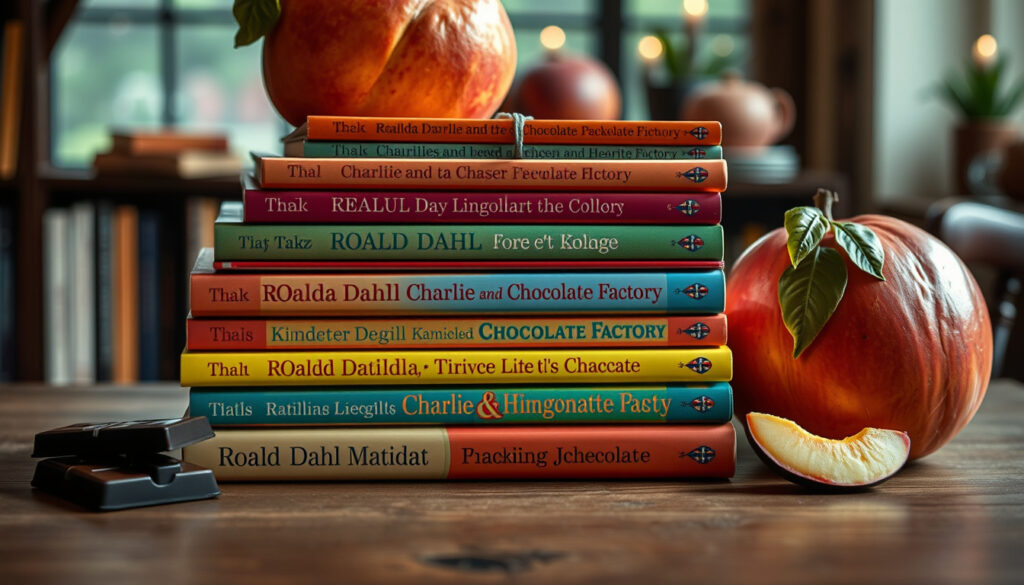
Roald Dahl Book Guide: Most Famous Books & Reading Order
Few children’s authors have left a mark quite like Roald Dahl — his books have been translated into 58 languages and continue to captivate readers decades after publication. This guide breaks down his most famous works, the recommended reading order, age suitability, and his darkest book, all grounded in verified data from the Roald Dahl Museum (official archive) and Penguin Books (publisher guide).
Total books published by Roald Dahl: 48 ·
Best-selling book: Charlie and the Chocolate Factory (over 20 million copies) ·
Languages translated into: 58 ·
Number of film adaptations: 6 ·
Year of first children’s book: 1961 (James and the Giant Peach) ·
Year of last children’s book: 1990 (Esio Trot)
Quick snapshot
- First children’s book: James and the Giant Peach (1961) (Roald Dahl Museum (official archive))
- Most famous children’s work: Charlie and the Chocolate Factory (1964) (Roald Dahl Museum (official archive))
- Last children’s book published while alive: Esio Trot (1990) (Roald Dahl Museum (official archive))
- Exact worldwide sales figures for individual titles vary by source and edition (Penguin Books (publisher guide))
- Age recommendations are guidelines, not official ratings; child’s reading level and sensitivity matter more than calendar age (Tutor Doctor (reading recommendations))
- Page counts differ across editions and formats (Penguin Books (publisher guide))
- The Roald Dahl Museum maintains a definitive timeline of Dahl’s published works, organized by decade (Roald Dahl Museum (official archive))
- The most prolific decade was the 1980s, with seven children’s books published (Roald Dahl Museum (official archive))
- New readers can start anywhere — there is no required order (Penguin Books (publisher guide))
- Summer reading lists and school curricula continue to feature Dahl’s classics (Penguin Shop (curated collection))
Six key facts about Roald Dahl and his body of work, drawn from the museum archive and publisher records:
| Attribute | Value |
|---|---|
| Full Name | Roald Dahl |
| Born | 13 September 1916, Llandaff, Wales |
| Died | 23 November 1990, Oxford, England |
| Notable Works | Charlie and the Chocolate Factory, Matilda, The BFG, James and the Giant Peach, The Witches |
| Number of Books | 48 (including children’s and adult works) |
| Most Translated Book | The Twits (58 languages) |
What is Roald Dahl’s most famous book?
What is the best-selling Roald Dahl book?
Charlie and the Chocolate Factory is generally considered Dahl’s most famous work. It was published in 1964 and has sold over 20 million copies worldwide, according to publisher estimates (Penguin Books (publisher guide)). The story of Charlie Bucket and Willy Wonka has spawned two major film adaptations and remains a staple of children’s literature.
What is the most popular Roald Dahl book among children?
Matilda (1988) is often cited by young readers as a favorite. The Roald Dahl Museum’s timeline notes its publication in 1988 (Roald Dahl Museum (official archive)), and the Penguin Shop (curated collection) includes it in its “Very Best of Roald Dahl” 14-book set. Its theme of a book-loving girl overcoming cruel adults resonates widely.
Both books anchor Dahl’s legacy, but Charlie drives global brand recognition while Matilda drives reader loyalty. For a first introduction, either works — but Charlie is the safer bet for younger audiences unfamiliar with Dahl’s darker edges.
The implication: for parents, starting with Charlie offers a gentle introduction to Dahl’s world before exploring his darker tales.
What is the order of the Roald Dahl books?
Should I read Roald Dahl books in publication order?
There is no required order — each story stands alone. The Penguin Books (publisher guide) emphasizes that the selection is “not in any particular order.” However, reading in publication order (starting with James and the Giant Peach in 1961) reveals how Dahl’s style evolved from gentle fantasy to sharper, more satirical narratives.
Is there a chronological order of Roald Dahl’s stories?
Chronologically, Charlie and the Chocolate Factory (1964) precedes its sequel Charlie and the Great Glass Elevator (1972), so those two benefit from being read in order. All other books are independent. The Roald Dahl Museum’s timeline confirms the sequence decade by decade (Roald Dahl Museum (official archive)).
Publication order works for completists, but most children will lose interest if forced to start with Dahl’s earliest, less polished works. Let a child’s curiosity guide the choice.
Seven key publication milestones from the museum archive:
| Book | Publication Year |
|---|---|
| James and the Giant Peach | 1961 (Roald Dahl Museum (official archive)) |
| Charlie and the Chocolate Factory | 1964 (Roald Dahl Museum (official archive)) |
| Fantastic Mr. Fox | 1970 (Roald Dahl Museum (official archive)) |
| The BFG | 1982 (Roald Dahl Museum (official archive)) |
| The Witches | 1983 (Roald Dahl Museum (official archive)) |
| Matilda | 1988 (Roald Dahl Museum (official archive)) |
| Esio Trot | 1990 (Roald Dahl Museum (official archive)) |
The implication: if you want to see Dahl mature as a writer, read the 1961–1990 span in order. But skipping around is perfectly fine.
What age is best for Roald Dahl books?
What Roald Dahl books are suitable for 5–7 year olds?
- Esio Trot — recommended for ages 3–5 by Tutor Doctor (reading recommendations) (short, gentle story about a tortoise)
- Fantastic Mr. Fox — ages 5–7 (Tutor Doctor (reading recommendations))
- The Twits — accessible for early readers, dark humor but not scary
- The Enormous Crocodile — short and fun
What Roald Dahl books are for older children?
- Charlie and the Chocolate Factory — ages 7–10 (Tutor Doctor (reading recommendations))
- The BFG — ages 7–10, dreamy fantasy with mild peril
- Matilda — ages 8–12, themes of child abuse handled with humor
- The Witches — ages 8–12, arguably the darkest and most intense
The pattern: age bands are flexible, but matching book length and thematic weight to a child’s maturity matters more than the number on the cover.
What 5 books did Roald Dahl write?
What are the must-read Roald Dahl books?
The five most acclaimed children’s books, repeatedly highlighted in curated lists, are:
- Charlie and the Chocolate Factory (1964)
- Matilda (1988)
- The BFG (1982)
- James and the Giant Peach (1961)
- The Witches (1983)
These five appear together in Penguin’s “Very Best of Roald Dahl” 14-book collection (Penguin Shop (curated collection)). Each has sold millions and been adapted for screen or stage.
What are the top 5 Roald Dahl books?
Six books often compete for the top 5 — Fantastic Mr. Fox (1970) sometimes replaces James in popularity rankings. The table below compares the essential five across key dimensions.
Five classics, one comparison — which fits your reader best?
| Book | Year | Age Recommendation | Popularity Signal |
|---|---|---|---|
| Charlie and the Chocolate Factory | 1964 (Roald Dahl Museum) | 7–10 (Tutor Doctor) | Included in “Very Best” set (Penguin Shop) |
| Matilda | 1988 (Roald Dahl Museum) | 8–12 (Tutor Doctor) | Included in “Very Best” set (Penguin Shop) |
| The BFG | 1982 (Roald Dahl Museum) | 7–10 (Tutor Doctor) | Included in “Very Best” set (Penguin Shop) |
| James and the Giant Peach | 1961 (Roald Dahl Museum) | 7–10 (Tutor Doctor) | Included in “Very Best” set (Penguin Shop) |
| The Witches | 1983 (Roald Dahl Museum) | 8–12 (Tutor Doctor) | Included in “Very Best” set (Penguin Shop) |
The pattern: all five books are for roughly the same age band, but The Witches and Matilda lean slightly older due to thematic weight.
What is Roald Dahl’s darkest book?
What is the scariest Roald Dahl book?
The Witches (1983) is widely considered Dahl’s darkest children’s book. It features a grand high witch who plans to turn all children into mice, and the protagonist’s grandmother is both a source of warmth and a carrier of disturbing knowledge. The Roald Dahl Museum (official archive) records its publication in 1983, and it has been a perennial source of discussion about age appropriateness.
Which Roald Dahl book has the most disturbing themes?
Dahl’s adult short stories — collected in Tales of the Unexpected and Kiss Kiss — are arguably darker than any of his children’s books. The Penguin Books (publisher guide) notes that his adult work explores betrayal, revenge, and psychological horror. Among children’s books, The Twits (1980) has deeply unkind protagonists but a cartoonish tone, while The Witches sustains a genuine sense of threat.
For a 7-year-old, The Witches may cause nightmares. For a 10-year-old, it becomes a thrilling power fantasy. Know your child’s sensitivity before handing it over.
The catch: what scares a 7-year-old can empower a 10-year-old — age is less important than individual sensitivity.
Confirmed facts vs. what remains unclear
Confirmed facts
- Charlie and the Chocolate Factory was published in 1964 (Roald Dahl Museum)
- Matilda was published in 1988 (Roald Dahl Museum)
- Roald Dahl died in 1990 (Roald Dahl Museum)
- There is no required reading order for children (Penguin Books)
- The Twits has been translated into 58 languages (Penguin Shop)
What’s unclear
- Exact sales figures for each title vary by source and edition
- Age recommendations from Tutor Doctor are based on a single blog post, not official publisher guidelines (Tutor Doctor)
- Page counts differ across editions and formats
- Whether James and the Giant Peach or Fantastic Mr. Fox is more popular depends on the survey and region
- The number of film adaptations can vary by how adaptations are counted; some lists include more than six
This selection is not in any particular order.
Penguin Books (publisher guide)
The timeline is a definitive timeline of Dahl’s published works.
Roald Dahl Museum (official archive)
No child is too young for Roald Dahl — you just have to pick the right book.
Tutor Doctor (reading recommendations)
For parents building a home library, the conclusion is straightforward: Dahl’s books reward curiosity more than sequence. Let your child grab whichever cover catches their eye — the story will do the rest. If your child is under 7, reach for Esio Trot or Fantastic Mr. Fox first. If they’re 8 or older, hand them Matilda or Charlie and the Chocolate Factory and watch them disappear into a world where small people outwit big bullies. The risk isn’t reading Dahl too young — it’s missing the magic altogether.
onemanbookclub.com, goodreads.com, community.babycenter.com, readingquests.com, en.wikipedia.org, goodreads.com, arapahoelibraries.bibliocommons.com, schoolreadinglist.co.uk, mexicohoteles.mx
For readers who want to explore further, a complete Roald Dahl guide provides age recommendations for each of his most beloved titles.
Frequently asked questions
How many books did Roald Dahl write for children?
Roald Dahl wrote 21 children’s books. The Roald Dahl Museum lists them in a decade-by-decade timeline.
What is the first Roald Dahl book I should read?
There is no required starting point, but Charlie and the Chocolate Factory is the most accessible and famous. Penguin Books recommends letting the reader choose.
Are Roald Dahl books appropriate for 8-year-olds?
Yes, most of his books are written for ages 7–12. The Witches may be intense for some 8-year-olds; parents can preview it first. Tutor Doctor suggests Charlie and The BFG for this age group.
Which Roald Dahl book has the most words?
The BFG and Matilda are among the longest, with word counts around 40,000–50,000 depending on the edition. Exact numbers vary by publisher and format.
What is Roald Dahl’s most famous book for adults?
Tales of the Unexpected is his best-known adult collection. Penguin Books notes that his adult stories are darker and more psychological.
What is the best Roald Dahl book for a 10-year-old?
Matilda and The Witches are excellent for a 10-year-old. The Witches offers more edge; Matilda offers inspiration. Both are included in Penguin’s “Very Best” set (Penguin Shop).
Why are Roald Dahl books so popular?
They combine mischievous humor, morally clear outcomes (bad adults get punished, clever kids win), and inventive language. The Roald Dahl Museum attributes his enduring appeal to “the perfect blend of fun and fear.”
More related posts
 Frankie Muniz’s Career Transition: From Acting to NASCAR
 Oliver Bearman: 50G Crash, FIA Controversy & Salary
 Sherrie Hewson: Age, Marital Status, and Current Roles
 Weather in Lanzarote Today – Current Conditions and Hourly Forecast
 Anthony Mackie: Biography, Marriage, Net Worth, and 8 Mile
 World War 3 Start Date – Failed Predictions and Expert Analysis
 Liam Manning Tragedy: Family Loss and Huddersfield Exit
 Tracy Austin: Youngest US Open Champion, Family & Health
