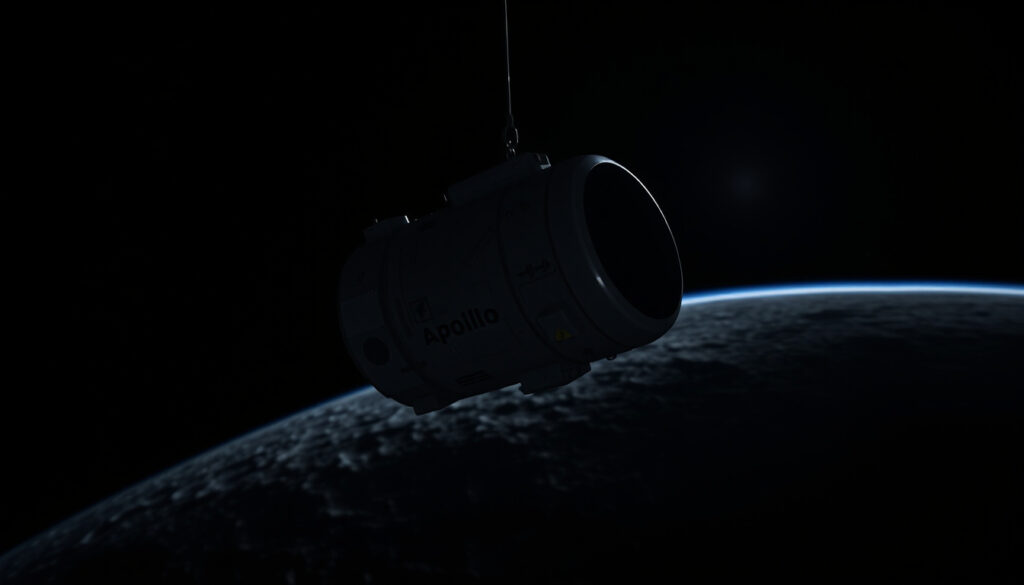
Jim Lovell: Apollo 13 Commander, Marriage, and Death
Few astronauts have faced a crisis quite like Jim Lovell did in April 1970, when an oxygen tank explosion turned a Moon mission into a fight for survival, and his calm command of Apollo 13 made him a household name. Lovell’s legacy extends beyond those four harrowing days, from flying the first crewed orbit of the Moon on Apollo 8 to building a 73-year marriage.
Born: March 25, 1928, Cleveland, Ohio ·
Died: August 7, 2025 (aged 97), near Chicago, Illinois ·
NASA missions: Gemini VII, Gemini XII, Apollo 8, Apollo 13 ·
Key role: Commander of Apollo 13, 1970 ·
Spouse: Marilyn Lovell (married 1952) ·
Portrayed by: Tom Hanks in Apollo 13 (1995)
Quick snapshot
- Jim Lovell died August 7, 2025, at age 97 (NASA)
- He flew four NASA missions: Gemini VII, Gemini XII, Apollo 8, Apollo 13 (NBC News)
- Married to Marilyn Lovell from 1952 until his death (Britannica)
- His actual radio transmission was “Houston, we’ve had a problem” (Britannica)
- The exact cause of death has not been officially released by the family as of August 2025
- Some details of Lovell’s private business ventures after retirement are not fully public
- Lovell’s exact net worth or financial details after his business career are not publicly available
- The specific details of Lovell’s relationship with his children in later years are not widely reported
- The full extent of Lovell’s involvement in space policy advocacy after retirement is unclear
- NASA and the Smithsonian will continue to preserve Lovell’s legacy through exhibits and oral histories (Smithsonian National Air and Space Museum)
- Public interest in Apollo 13 and Lovell’s story is expected to remain high, especially with the 55th anniversary of the mission approaching in 2025 (Smithsonian National Air and Space Museum)
Seven key facts about Jim Lovell, drawn from NASA records and biographical sources:
| Label | Value |
|---|---|
| Full name | James Arthur Lovell Jr. |
| Born | March 25, 1928, Cleveland, Ohio |
| Died | August 7, 2025, near Chicago, Illinois |
| NASA missions | 4 (Gemini VII, Gemini XII, Apollo 8, Apollo 13) |
| Role on Apollo 13 | Commander |
| Spouse | Marilyn Lovell (1952–2025) |
| Children | 4 (Barbara, James III, Susan, Jeffrey) |
Are any Apollo 13 crew still alive?
As of August 2025, none of the three Apollo 13 astronauts are still living. The crew consisted of commander Jim Lovell, command module pilot Jack Swigert, and lunar module pilot Fred Haise. Swigert died in 1982 from cancer, Haise died in 2024, and Lovell’s death on August 7, 2025, means the entire crew has now passed away (CBS News).
Who were the three Apollo 13 astronauts?
- Jim Lovell (commander) — flew Gemini VII, Gemini XII, Apollo 8, and Apollo 13. Died 2025.
- Jack Swigert (command module pilot) — joined the crew days before launch after Ken Mattingly was exposed to rubella. Died 1982.
- Fred Haise (lunar module pilot) — later flew Space Shuttle approach and landing tests. Died 2024.
The implication: With Lovell’s passing, the last direct link to the Apollo 13 story from the crew’s perspective is gone. Future retellings will rely on archival recordings and written records rather than living memory.
What happened to Fred Haise after Apollo 13?
Fred Haise continued his NASA career after Apollo 13, serving as backup commander for Apollo 16 and later flying the Space Shuttle Enterprise during approach and landing tests in 1977 (Britannica). He retired from NASA in 1979 and worked in the aerospace industry. Haise died on May 2, 2024, at age 90.
Did Jack Swigert survive the mission?
Yes, Jack Swigert returned safely to Earth aboard Apollo 13 on April 17, 1970. He later served as a U.S. Representative from Colorado but died of cancer on December 27, 1982, before taking office (Britannica).
The pattern: Lovell’s death closes the final chapter of the Apollo 13 story.
What happened to Jim Lovell after Apollo 13?
After the Apollo 13 mission, Lovell’s life took a turn away from spaceflight and into business, writing, and public speaking. He retired from NASA and the U.S. Navy in 1973, ending a career that had spanned two decades of service (Britannica).
Did Jim Lovell retire from NASA?
Yes, Lovell retired from NASA and the U.S. Navy in 1973. He had served as a Navy captain and test pilot before joining NASA’s astronaut corps in 1962 as part of the second astronaut class (Smithsonian National Air and Space Museum).
What business career did Jim Lovell have?
After leaving NASA, Lovell worked in the private sector. He held executive roles in telecommunications at Centel Corporation and later in the energy industry at the Illuminating Company (Britannica). He also co-authored the book “Lost Moon” (later retitled “Apollo 13”) with Jeffrey Kluger, published in 1994.
How did Jim Lovell become a public figure?
Lovell’s public profile grew significantly after the 1995 film “Apollo 13,” in which Tom Hanks portrayed him. Lovell served as a technical consultant on the film, ensuring accuracy in the depiction of the mission (NBC News). The film’s success introduced his story to a new generation and cemented his status as a symbol of crisis management under pressure.
Lovell’s post-NASA career proved that an astronaut’s influence doesn’t end with retirement. By writing his own account and consulting on the film, he controlled the narrative of Apollo 13 — ensuring the public remembered it as a “successful failure” rather than a disaster.
The implication: Lovell’s post-NASA life demonstrated that crisis management skills translate into lasting public influence.
Are Jim and Marilyn Lovell still married?
Jim and Marilyn Lovell were married for 73 years, from 1952 until Jim’s death in 2025. Their marriage is one of the longest-lasting among NASA astronauts, a notable contrast to the high divorce rates that affected many of his colleagues (Britannica).
How long were Jim and Marilyn married?
The couple married in 1952 in Milwaukee, Wisconsin, and remained together for 73 years. Marilyn Lovell was a central figure during the Apollo 13 crisis, and her perspective is documented in NASA oral histories (NASA).
How many children do they have?
Jim and Marilyn Lovell had four children: Barbara, James III, Susan, and Jeffrey. The family lived in the Chicago area after Lovell’s retirement from NASA.
What is known about their relationship?
Marilyn Lovell was at Mission Control during the Apollo 13 crisis, and her experience was depicted in the 1995 film. The couple’s 73-year marriage stands as one of the longest among NASA astronauts, a fact that has drawn attention in discussions about astronaut marriage fidelity (NASA).
For astronauts, the demands of training and long separations often strained marriages. Lovell’s 73-year marriage stands as an exception. For readers interested in the human side of space exploration, his relationship with Marilyn offers a counterpoint to the more turbulent personal lives of some other Apollo-era astronauts.
The pattern: Lovell’s marriage longevity provides a rare example of stability in a high-pressure profession.
What did Jim Lovell actually say?
One of the most famous lines in space history is often misquoted. During the Apollo 13 crisis, Lovell’s actual radio transmission to Mission Control was: “Houston, we’ve had a problem.” The 1995 film changed the line to “Houston, we have a problem” for dramatic effect (Britannica).
What was Jim Lovell’s famous line?
The exact words Lovell transmitted on April 13, 1970, were: “Houston, we’ve had a problem.” The difference is subtle but significant — “we’ve had” implies the event has already occurred, while “we have” suggests it is ongoing. NASA’s official transcripts confirm the original wording.
Did Jim Lovell say ‘Houston, we have a problem’?
No, that version was created for the 1995 film. The scriptwriters changed “we’ve had” to “we have” for dramatic pacing. Lovell himself has noted the difference in interviews, though he has said he appreciates the film’s overall accuracy.
What did Lovell say about not walking on the Moon?
Lovell expressed regret about not walking on the Moon, but he consistently emphasized that the survival of the crew was the most important outcome. He told interviewers that while he missed the opportunity, bringing his crew home safely was the greater achievement (Britannica).
The catch: The misquote has become part of popular culture, but the original phrasing underscores the crew’s composed response to an already-occurred event.
Which astronauts were faithful to their wives?
Jim Lovell’s 73-year marriage stands out in the context of NASA’s Apollo era, where several astronauts experienced high-profile divorces. Lovell’s fidelity to Marilyn has been noted in biographical accounts and was praised by Tom Hanks in tributes after Lovell’s death (NBC News).
What makes Jim Lovell’s marriage notable?
Among the Apollo astronauts, Lovell’s marriage stands out for its longevity. While many of his peers experienced divorces — including Buzz Aldrin, Neil Armstrong, and others — Lovell remained married to Marilyn for 73 years. The couple’s relationship was tested during the Apollo 13 crisis, when Marilyn waited anxiously at home while the world watched the rescue unfold.
How did other astronaut marriages compare?
Divorce rates among Apollo-era astronauts were high. Buzz Aldrin divorced twice, Neil Armstrong divorced once, and several others had multiple marriages. Lovell’s consistent marriage has been cited as an exception to the pattern, though it is not often discussed in mainstream space history narratives.
What did Tom Hanks say about Jim Lovell?
After Lovell’s death, Tom Hanks paid tribute, praising Lovell’s character and his marriage. Hanks, who portrayed Lovell in the 1995 film, described him as a man of integrity and noted the strength of his relationship with Marilyn (NBC News).
The implication: Lovell’s personal life provides a counter-narrative to the stereotype of the troubled astronaut family.
Did Jim Lovell regret not walking on the Moon?
Lovell was scheduled to walk on the Moon as commander of Apollo 13. The mission was aborted after an oxygen tank explosion on April 13, 1970, and the crew returned safely on April 17. Lovell went to the Moon twice — on Apollo 8 and Apollo 13 — but never landed (Britannica).
Why did Lovell never walk on the Moon?
Lovell was assigned to command Apollo 13, which was scheduled to land in the Fra Mauro highlands region of the Moon. The mission was aborted after an oxygen tank explosion on April 13, 1970. He had previously flown to the Moon on Apollo 8 in December 1968, but that mission was an orbital flight without a landing.
What was Lovell’s view on missing the Moon landing?
In interviews, Lovell acknowledged his disappointment but framed it within the larger context of the mission’s success. He said the safe return of the crew was the priority and that he took pride in how the team handled the crisis (Britannica).
How did the Apollo 13 accident affect his career?
The accident effectively ended Lovell’s chances of walking on the Moon. He was backup commander for Apollo 11 and had been in line for a lunar landing mission, but after Apollo 13, NASA’s rotation meant he would not get another opportunity. He retired from NASA in 1973.
The pattern: Lovell’s unfulfilled lunar ambition became a defining part of his legacy, emphasizing the fragility of space exploration.
Timeline: Jim Lovell’s life and career
Twelve key dates trace Lovell’s journey from a Cleveland childhood to his place in space history:
- March 25, 1928 — James Arthur Lovell Jr. born in Cleveland, Ohio (Britannica)
- 1952 — Married Marilyn Gerlach in Milwaukee
- 1962 — Selected for NASA Astronaut Group 2 (Smithsonian National Air and Space Museum)
- December 1965 — Gemini VII mission (pilot, 14 days in orbit) (Smithsonian National Air and Space Museum)
- November 1966 — Gemini XII mission (commander, final Gemini flight) (Smithsonian National Air and Space Museum)
- December 1968 — Apollo 8 — first crewed orbit of the Moon (command module pilot) (NASA)
- April 1970 — Apollo 13 mission — oxygen tank explosion, aborted landing, safe return (Britannica)
- 1973 — Retired from NASA and US Navy
- 1975–1990s — Executive roles in telecommunications (Centel) and energy (Illuminating Co.)
- 1994 — Published “Lost Moon” (later retitled “Apollo 13”)
- 1995 — Apollo 13 film released, Tom Hanks portrays Lovell
- August 7, 2025 — Jim Lovell dies at age 97 in Lake Forest, Illinois (NASA)
Lovell’s timeline shows a career that spanned the entire early space race — from the first space rendezvous on Gemini VII to the first crewed Moon orbit on Apollo 8, and finally to the crisis that defined Apollo 13. For anyone studying NASA’s history, his trajectory mirrors the agency’s own evolution from experimental flights to lunar exploration.
The implication: Lovell’s life offers a microcosm of NASA’s golden age.
Confirmed facts and what remains unclear
Confirmed facts
- Jim Lovell died August 7, 2025 (confirmed by NASA, CBS News, Smithsonian National Air and Space Museum)
- Lovell flew four NASA missions including Apollo 8 and Apollo 13 (NBC News)
- He was married to Marilyn Lovell from 1952 until his death (Britannica)
- His famous line was “Houston, we’ve had a problem” (NASA transcripts) (Britannica)
- No Apollo 13 crew members are alive as of 2025 (CBS News)
What’s unclear
- The exact cause of death has not been officially released by the family as of August 2025
- Some details of Lovell’s private business ventures after retirement are not fully public
- Lovell’s exact net worth or financial details after his business career are not publicly available
- The specific details of Lovell’s relationship with his children in later years are not widely reported
- The full extent of Lovell’s involvement in space policy advocacy after retirement is unclear
The pattern: While the major milestones of Lovell’s life are well-documented, the finer details of his personal and financial life remain private.
Quotes and perspectives
“Houston, we’ve had a problem.”
— Jim Lovell, actual radio transmission during Apollo 13 explosion, April 13, 1970 (Britannica)
“Jim Lovell was a man of extraordinary calm and courage. His leadership during Apollo 13 saved the lives of his crew and inspired millions.”
— Tom Hanks, tribute to Jim Lovell after his death, 2025 (NBC News)
“I was watching the news and I knew something was wrong. But I had faith in Jim and the team.”
— Marilyn Lovell, Apollo 13 oral history interview, NASA archives (NASA)
“Jim Lovell’s calm strength under pressure helped return Apollo 13 safely to Earth. His life and work inspired millions across the decades.”
— NASA acting administrator, statement on Lovell’s passing, 2025 (NASA)
Jim Lovell’s life was defined by a single paradox: he flew to the Moon twice but never walked on it. Yet his legacy is arguably greater than if he had. The Apollo 13 mission, which could have ended in tragedy, became NASA’s finest hour because of the calm, methodical leadership he displayed. For the space community, the lesson is clear: sometimes the missions that go wrong teach us more than the ones that go right. For the general public, Lovell’s story is a reminder that character is revealed not in success, but in how we handle failure.
en.wikipedia.org, nmspacemuseum.org, npr.org, biography.com, facebook.com, chicago.suntimes.com, facebook.com, zeitungmagazin.at
Frequently asked questions
Was Jim Lovell the first person to walk on the Moon?
No, Neil Armstrong was the first person to walk on the Moon during Apollo 11 in July 1969. Lovell never walked on the Moon.
Did Jim Lovell ever fly on the Space Shuttle?
No, Lovell retired from NASA in 1973, before the Space Shuttle program began its first flights in 1981.
Why is Jim Lovell famous?
Lovell is best known as the commander of Apollo 13, the mission that suffered an oxygen tank explosion but returned safely to Earth. He also flew on Apollo 8, the first crewed mission to orbit the Moon.
How old was Jim Lovell when he died?
Jim Lovell was 97 years old when he died on August 7, 2025.
Did Jim Lovell go to college?
Yes, Lovell attended the University of Wisconsin–Madison for two years before transferring to the United States Naval Academy, where he graduated in 1952.
What awards did Jim Lovell receive?
Lovell received the Presidential Medal of Freedom in 1970, the Congressional Space Medal of Honor in 1995, and the NASA Distinguished Service Medal, among other honors.
Is the Apollo 13 film accurate?
The film is widely regarded as one of the most accurate space movies ever made. Lovell served as a technical consultant, though the famous line was changed from “we’ve had” to “we have” for dramatic effect.
For readers interested in other notable lives, see Prince Philip: Life, Death, and Key Relationships and Henry VIII: Wives, Height, Death, and Madness.
More related posts
 How to Make Cheesecake: Easy Step-by-Step Recipe Guide
 Brenda Vaccaro: Biography, Career, and Michael Douglas
 Laila Rouass: Biography, Career, and Ronnie O’Sullivan
 Houses for Sale Scotland – Listings, Prices and Buyer’s Guide
 How to Play Poker: Beginner’ Guide to Rule and Hand
 Marcus Smith Dropped: Salary, Age, Height, Relationship
 Good Movies to Watch – Best Streaming Picks 2024
 Caroline Catz: Life After Doc Martin and New Projects
