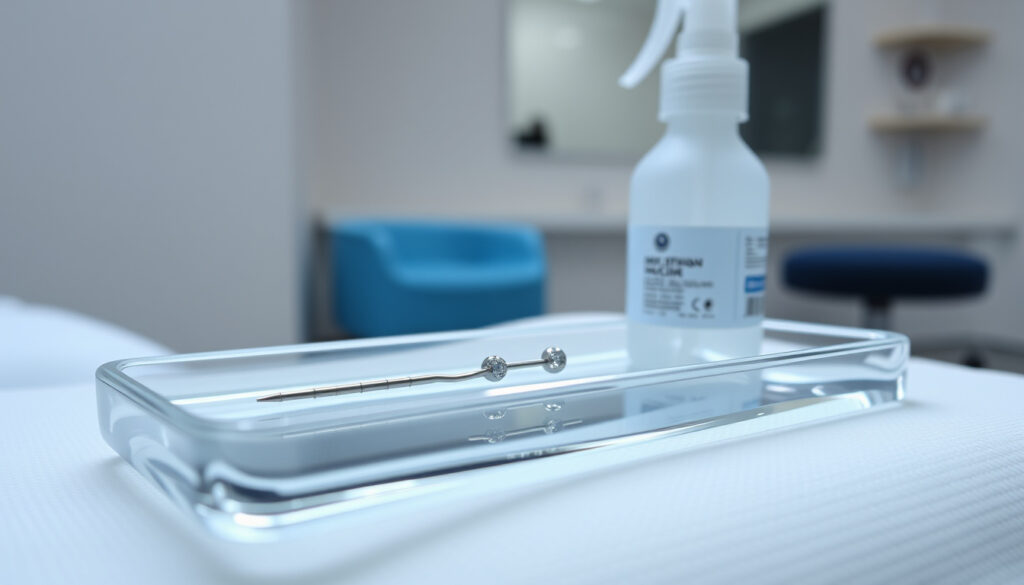
Nose Piercing Near Me: Costs, Methods & Where to Go
Thinking about getting your nose pierced? You’re not alone — it’s one of the most popular piercings out there. Finding the right studio near you can make all the difference between a smooth experience and a painful mistake.
Average cost: $30 – $80 (excluding jewelry) ·
Healing time: 4 to 6 months for full healing ·
Pain level: 3–5 out of 10 ·
Most common side: Left nostril
Quick snapshot
- Needle piercing is safer than gun for cartilage (Lark & Berry fine piercing guide)
- Average cost of nose piercing ranges $30–$80 (industry standard, per piercing professionals) (Lark & Berry fine piercing guide)
- Claire’s does not perform nose piercings (ear only) (Claire’s piercing services page)
- Exact price in Ireland may vary by studio and city
- Pain perception is subjective; rankings differ per individual
- Full healing takes 4–6 months (Lark & Berry healing guide)
- Initial swelling subsides in 1–2 weeks (Lark & Berry healing guide)
- Search “nose piercing near me” and check reviews (Solana Tattoo aftercare tips)
- Book a consultation with a licensed piercer (Solana Tattoo aftercare tips)
- Prepare for aftercare: saline spray, avoid touching (Solana Tattoo aftercare tips)
| Minimum age for piercing (Ireland) | 16 with parental consent; 18 without |
|---|---|
| Healing stages | Initial swelling 1-2 weeks, full healing 4-6 months |
| Jewelry material for initial piercing | Surgical steel, titanium, or niobium |
| Cleaning solution | Saline spray, no alcohol or peroxide |
How much is a nose piercing usually?
One of the first questions people ask is about cost. The average price for a professional nose piercing (service fee only) falls between $30 and $80, depending on the studio and location. Jewelry upgrades — like titanium or niobium — add another $20–$50. In Ireland, prices tend to range from €25 to €60 for the piercing itself.
What affects the price of a nose piercing?
- Geographic location — urban studios often charge more than suburban ones
- Piercer experience and reputation — a seasoned professional commands a higher fee
- Jewelry material and brand — implant-grade titanium costs more than surgical steel
Studio overheads like rent, insurance, and sterilization equipment are also factored in. A very low price may signal corners cut on hygiene. As Solana Tattoo (piercing education resource) points out, cheap piercings often use guns, which are unsuitable for noses.
How much does a nose piercing cost in Ireland?
Based on listings from Dublin studios, you can expect to pay €30–€55 for a needle piercing at a reputable parlour. Studios like The Ink Factory and Pierced typically list clear prices on their websites. Walk-in prices may be slightly higher. A 2023 price check on Fresha (booking platform) shows Dublin nose piercings starting at €35 including basic jewelry.
If a studio quotes €15 for a nose piercing, ask what method they use. You’re likely getting a gun — and that’s a bad deal for your cartilage.
The implication: paying €30–€55 upfront for a needle piercing saves you from months of complications that a cheap gun piercing can cause.
Which is better, gunshot or needle piercing for nose?
This is the most critical decision. Professional piercers overwhelmingly recommend a sterile, single-use hollow needle for nose piercings. Guns are designed for soft earlobes, not cartilage. According to Lark & Berry (fine piercing guide), guns use blunt force, which can shatter cartilage and cause more trauma.
Why needle piercing is recommended for noses
- Precise placement — needles allow the piercer to angle the jewelry correctly (Solana Tattoo precision comparison)
- Lower infection risk — single-use, pre-sterilized needles come from sealed pouches
- Faster healing — less tissue damage means less swelling and shorter recovery
Risks of gunshot for cartilage
- Blunt force can cause cartilage fracture or permanent bumps
- The gun itself can’t be fully sterilized, raising infection risk
- Healing takes longer, often 6–8 weeks vs. 4–6 weeks with needle
Many high-street jewellery shops offer gun piercings for ears, but they explicitly exclude nostrils. Claire’s piercing FAQ confirms they only pierce earlobes and cartilage — they do not perform nose piercings. That’s a clear signal that guns aren’t for noses.
4 aspects, one pattern: needle wins on every safety metric. Here’s the direct comparison:
| Aspect | Needle | Gun |
|---|---|---|
| Precision | High — piercer controls angle and depth | Low — spring mechanism is unpredictable |
| Tissue trauma | Minimal — sharp hollow needle cuts cleanly | High — blunt force tears and compresses tissue |
| Infection risk | Very low (single-use sterile needle) | Higher (gun cannot be autoclaved) |
| Healing time | 4–6 weeks for initial healing | 6–8 weeks or longer |
| Recommended for nose? | Yes — professional standard | No — explicitly warned against |
The pattern: needle outperforms gun on every measurable safety and healing metric for nose cartilage.
Upsides
- Needle gives a cleaner, more comfortable piercing
- Lower complication rate means fewer follow-up visits
- Faster healing with less pain
Downsides
- Needle piercings cost slightly more upfront
- Requires a trained professional rather than a mall kiosk
- Not all walk-in studios advertise their method clearly
What side should females get their nose pierced on?
There’s no medical rule dictating a specific side. Cultural and traditional preferences vary — in some regions, the left nostril is traditionally associated with Ayurvedic medicine and bridal adornment. In modern Western piercing, it’s purely personal. According to Totapari (piercing culture guide), many clients choose the side that complements their facial symmetry.
What is the 2 3 rule for piercings?
This refers to jewelry sizing guidelines often used for nose rings. The “2” stands for the gauge (2 is thicker; common nostril gauges are 18G or 20G). The “3” stands for the ring diameter in millimetres — a typical nostril ring has a 6–8 mm inner diameter. It’s a quick reference for new piercers, not a hard rule.
What is a lady Diana piercing?
The Lady Diana piercing is a double nostril piercing on the same side, usually with two small studs or a chain connecting them. It’s named after the late Princess Diana, who was rarely photographed with such a piercing. This placement can be done in one session by an experienced piercer.
The pattern: there is no right or wrong side — your choice depends on cultural preference, facial symmetry, or simply which nostril feels right to you.
What are the top 3 most painful piercings?
Pain is subjective, but some piercings consistently rank higher. According to professional piercers, the top three most painful are nipple, genital, and daith (inner ear cartilage). Nose piercing is low-to-mid on the scale, typically rated 3–5 out of 10. As Totapari’s pain guide notes, the sensation is more pressure than sharp pain, and it’s over in seconds.
Where does nose piercing rank on the pain scale?
- Nostril piercing: 3–5/10
- Septum piercing: 4–6/10 (sensitive “sweet spot”)
- Bridge piercing: 4–5/10
Most people describe it as a quick pinch followed by a dull ache that subsides within an hour.
How to reduce pain during nose piercing
- Choose an experienced needle piercer — the speed reduces discomfort
- Avoid caffeine and alcohol beforehand — they thin blood and increase bleeding
- Breathe slowly during the pierce — tensing up makes it hurt more
Fear of pain keeps many people from getting a piercing they’d love. Knowing it’s brief and manageable — and that a skilled piercer can make it almost painless — helps you make an informed choice.
What this means: nose piercing is one of the least painful options you can choose, ranking well below piercings like nipple or daith.
Where can I find a nose piercing near me?
Finding a professional studio is the final piece. Start with a search for “nose piercing near me” and look for studios that clearly advertise needle piercings, show their licenses, and display reviews. In Dublin, top names include The Ink Factory, PIERCED, and Piercer Charlie’s Creations. In Cork, check Google Maps for studios with 4.5+ stars and a professional website.
How to find a reputable piercer in Dublin
- Look for APP (Association of Professional Piercers) membership or a local health board license
- Read reviews that mention “needle,” “clean,” and “professional”
- Check their social media for photos of recent work — consistent placement quality is a good sign
Dublin has a thriving piercing scene. Studios like Pierced (Dublin piercing studio) list their prices and methods online, making it easy to compare.
Walk-in piercing studios in Cork
Cork also has several walk-in friendly studios. Use booking platforms like Fresha (booking platform) and Booksy (booking platform) to find available appointments. Filter by “nose piercing” and check if the studio mentions “single-use needle” in the description.
What to look for in a piercing studio
- Visible autoclave machine and sterilization area
- Piercer wears gloves and opens new equipment in front of you
- Studio is clean, well-lit, and has good ventilation
If a studio feels off — dirty mirrors, pierced by someone who’s also the receptionist — walk away. Your health is worth the extra 10-minute drive.
A low price from a mall kiosk often means a gun piercing. The few euros you save can cost you months of healing and a permanent bump. Spend the extra €15 on a needle piercing from a licensed professional.
The consequence: choosing a verified studio with visible sterilization and a needle-first policy directly determines whether your piercing heals cleanly or becomes a problem.
Clarity check
Confirmed facts
- Needle piercing is safer than gun for cartilage (Lark & Berry)
- Average cost of nose piercing ranges $30–$80
- Claire’s does not perform nose piercings (Claire’s)
What’s unclear
- Exact price in Ireland may vary by studio and city
- Pain perception is subjective; ranking differs per individual
“We never use a gun on cartilage. A needle gives us control and ensures a clean, fast-healing piercing.”
— Professional piercer from Piercer Charlie’s Creations (Dublin studio)
“Single-use needles are the only safe way to pierce cartilage. Guns cannot be properly sterilised and carry a risk of cross-contamination.”
— Health Protection Surveillance Centre (HPSC) guidance on body piercing
For anyone considering a nose piercing, the choice is straightforward: find a professional studio that uses a needle, expect to pay $30–$80, and commit to aftercare for the next 4–6 months. In Dublin and Cork, quality studios are easy to find if you know what to look for. The few euros saved by going cheap aren’t worth the risk. For the reader in Ireland, the decision is clear: pick a licensed piercer, book via Fresha or Booksy, and ask the method before you sit down — or risk a piercing that never quite heals right.
For the best results, consider reading more about Irish nose piercing studios and their safety standards before booking your appointment.
Frequently asked questions
Can I get a nose piercing with a gun?
Professional piercers strongly advise against it. Guns can shatter cartilage, cause more pain, and raise infection risk. Always choose a needle.
How long does a nose piercing take to heal?
Initial healing takes 4–6 weeks, but full healing (cartilage maturation) takes 4–6 months. Keep cleaning with saline throughout.
What is the best jewelry for a new nose piercing?
Implant-grade titanium, surgical steel, or niobium. Avoid nickel or cheap alloys. The piercer will choose the right gauge and size.
How do I clean my nose piercing?
Use a premade saline spray twice a day. Don’t use alcohol, peroxide, or harsh soaps. Rotate the jewelry gently after the first week if the piercer advises.
Can I use numbing cream for nose piercing?
Most piercers advise against it. Numbing creams can interfere with placement and aren’t sterile. The pain is brief — 3–5/10 for a few seconds.
What should I do if my nose piercing gets infected?
Signs: redness spreading, yellow/green discharge, heat. Continue saline cleaning and see a healthcare provider. Don’t remove the jewelry — it can trap the infection.
Is it safe to get a nose piercing while pregnant?
Most practitioners recommend waiting until after delivery due to infection risk and slower healing during pregnancy. Consult your midwife or GP.
More related posts
 Ruben Selles Hull City Sacking: What Happened & Why
 Tom Read Wilson: Real Voice, Posh Accent, Partner & Bio
 Georgina Rodríguez: Children, Age, and Relationship with Ronaldo
 Cha Joo-Young – Age, Height, Dramas and Career Facts
 Mutya Buena: Ethnicity, Marital Status & Personal Life
 Chloe Lewis: TOWIE Star, Romance with Dan Edgar and Tribute
 Buster Merryfield: The Bank Manager Who Became Uncle Albert
 Jack Osbourne Net Worth – 2025 Estimate Career Inheritance
