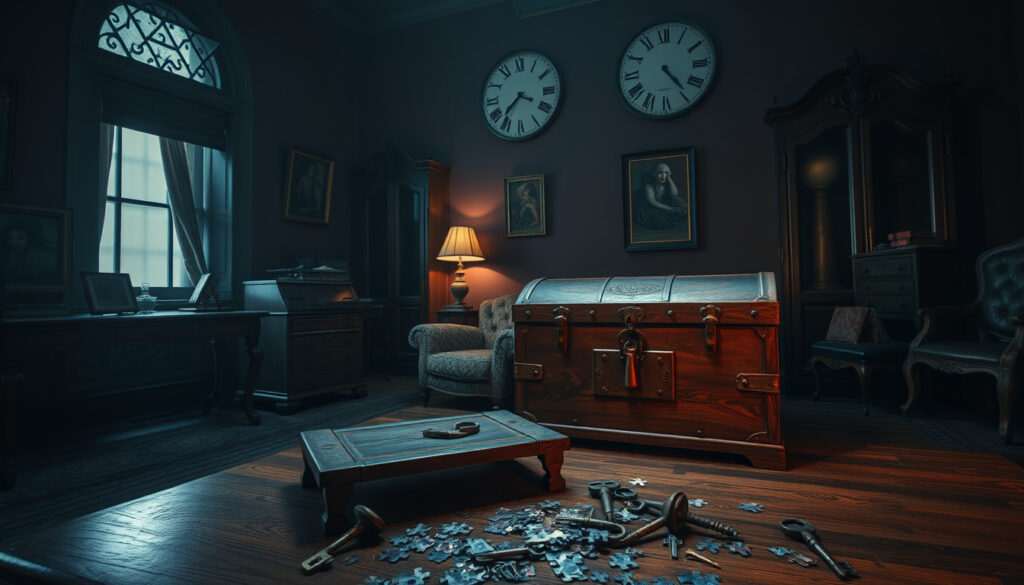
Escape Room Guide: Rules, Myths, and What to Expect
You’ve probably seen the locked rooms, heard the countdown clock, and wondered: is an escape room just a test of intelligence—or something else entirely? The truth is, these 60-minute puzzle adventures reward teamwork far more than IQ, and new research suggests they might even be uniquely suited to minds that think differently.
Average session length: 60 minutes ·
Typical team size: 2–8 players ·
Global escape room count (2025): over 10,000 ·
First-time success rate: about 20% ·
Escape Room movies released: 2 ·
Difficulty scale: 1–5
Quick snapshot
- Escape rooms are timed team puzzle games (Breakout Games (puzzle-room operator))
- Escape Room (2019) and Tournament of Champions (2021) are connected sequels (IMDb (film database))
- Phone use is prohibited in most rooms (PanIQ Escape Room (room operator))
- Many rooms allow children with adult supervision (Escape Reality (room operator))
- Official status of Escape Room 3 movie
- Clinical evidence on ADHD and escape room performance (mostly anecdotal so far)
- Exact success‑rate statistics vary by venue
- First commercial escape room opened in 2007 in Japan (Room Escape Artist (industry analyst))
- Escape Room film franchise released 2019 and 2021 (Room Escape Artist (industry analyst))
- Global count grew from ~3,000 (2018) to over 10,000 (2025) (Room Escape Artist (industry analyst))
- Growing demand for ADHD‑friendly and inclusive room designs
- Virtual and hybrid escape rooms expanding post‑pandemic
- Possible Escape Room 3 if franchise continues
Five snapshot facts help paint the full picture of what escape rooms offer.
| Attribute | Value |
|---|---|
| Average escape time | 45–60 minutes |
| Most common theme | Mystery / Detective |
| Escape success rate | ~20% of teams escape in time |
| Number of rooms in Dublin | 15+ |
| Movie series | 2 movies (2019, 2021) |
What exactly happens in an escape room?
The typical sequence of play
- Players enter a themed room and must solve a series of puzzles within 60 minutes (Breakout Games (puzzle-room operator)).
- Rooms can be linear (puzzles in sequence) or non‑linear (multiple puzzles at once).
- A game master monitors via camera and may give hints upon request (Escape Reality (room operator)).
- Arriving 10–15 minutes early for the briefing is standard practice.
The pattern: three stages—briefing, active play, and debrief—with the clock as the only real pressure.
Common puzzle types
- Locks and keys, combination codes, hidden objects, jigsaw assemblies, and logic riddles (Escapology (global room franchise)).
- Puzzles can be hidden inside drawers, under carpets, behind pictures, or inside everyday objects.
- Some rooms use electronic components like motion sensors or magnetic switches.
How teams communicate
- Always announce every clue aloud so teammates don’t waste time hunting for something already found (Breakout Games).
- Designate a central area for collected clues and tools—avoids confusion (Quest Room (room designer)).
- Divide and conquer: split up to search the room at the start, then regroup to discuss findings (Escape Reality).
First‑time teams that split up initially search faster but risk missing the big picture. The most effective groups take 90 seconds to fan out, then pool their discoveries.
Are people with ADHD good at escape rooms?
Strengths of ADHD players in puzzle rooms
- Hyperfocus—a common ADHD trait—can be highly beneficial during time‑limited tasks like escape rooms (ADDitude Magazine (ADHD resource)).
- The high‑stimulation, game‑like environment matches the cognitive style many ADHD individuals thrive in.
- Quick pattern recognition and out‑of‑the‑box thinking often help crack puzzles faster.
Why this matters: many ADHD players report feeling more engaged and less distracted inside an escape room than in everyday life.
Challenges and strategies
- Potential difficulty managing multiple simultaneous threads—teammates can help track progress.
- Used‑objects should be placed in a separate “done” pile to avoid confusion (PanIQ Escape Room).
- Asking for hints strategically prevents getting stuck too long on one puzzle.
The 30% rule explained
- The “30% rule of ADHD” describes how people with ADHD often complete tasks with about 30% less time than neurotypical peers due to focused bursts of energy.
- While not a clinical diagnosis, it’s a useful framework: escape rooms’ 60‑minute limit can feel comfortable when hyperfocus kicks in.
The catch: the same hyperfocus can cause a player to miss the rest of the room if they zero in on one puzzle too long.
Are escape room 1 and 2 related?
Plot connection between Escape Room (2019) and Escape Room 2 (2021)
- Escape Room (2019) and Escape Room: Tournament of Champions (2021) are directly connected sequels (IMDb).
- Both movies follow survivors of a deadly puzzle factory operated by the mysterious Minos corporation.
- The second film picks up with Zoey (Taylor Russell) and Ben (Logan Miller) from the first movie.
Are they a series?
- Yes—the two films are part of a planned franchise.
- The second film also had an alternate ending released on streaming, adding confusion about the canon (The Wrap (entertainment news)).
Is there an Escape Room 3 movie?
- No official Escape Room 3 has been announced as of 2025.
- Director Adam Robitel has expressed interest, but no studio green‑light has been confirmed.
Movie fans waiting for closure should temper expectations: the franchise is on hiatus, not cancelled, but the timeline is uncertain.
The implication: the film series is parked, so don’t hold your breath for a third chapter soon.
Is escape room only for adults?
Age restrictions and recommendations
- Many escape rooms allow children with a supervising adult (Escape Reality).
- Some rooms have minimum age restrictions—typically 10–16—due to difficulty or scare factor.
- Family‑ friendly themes (e.g., wizards, pirates, cartoon mysteries) are available for all ages.
What should you not do in an escape room?
- Do not use your phone except in emergencies—it spoils the immersive experience (PanIQ Escape Room).
- Do not force locks or break props—damage may result in penalties.
- Follow all safety briefing instructions, including emergency exit procedures.
- Do not play intoxicated (Quest Room).
Common etiquette mistakes
- Not sharing findings early—teammates can’t help if they don’t know what you found.
- Guessing random codes before solving the underlying puzzle (Breakout Games).
- Ignoring the game master’s hints—they are there to keep the game moving.
The pattern: age restrictions are flexible, but respecting rules and teammates is universal.
Do escape rooms require high IQ?
What skills matter most
- Escape rooms reward teamwork, communication, and observation more than raw IQ (Breakout Games).
- Many puzzles are designed for average intelligence with clear clues.
- Online reviews show first‑timers can succeed with good communication.
Beginner‑friendly rooms
- Most venues label rooms with difficulty ratings from 1 to 5; beginners should start at 1 or 2.
- Some rooms explicitly market themselves as “beginner‑friendly” with extra hint availability.
The pattern: escape rooms are less about being smart and more about being organised.
| Type | Puzzle structure | Best for |
|---|---|---|
| Linear | Puzzles must be solved in fixed order | Teams that like clear progression |
| Non‑linear | Multiple puzzles available simultaneously | Larger teams who can divide work |
| Family | Easier puzzles, no jump scares | Families with children 6+ |
| Horror | Dark themes, actors, or atmospheric scares | Adults seeking thrill (minimum age 16+) |
Four types, one truth: the room you choose should match your team’s comfort level, not your IQ.
Upsides
- Builds teamwork and communication skills
- Accessible to diverse cognitive styles
- No physical fitness required
- Great for group outings and team building
Downsides
- Can be expensive per person (€25–€40 typical)
- Not all rooms are equally accessible
- Success rate low for first‑timers may frustrate
- Some themes may scare younger players
The verdict: escape rooms are a low‑barrier activity where collaboration beats brainpower.
Step‑by‑step: preparing for your first escape room
- Book a beginner‑rated room (difficulty 1 or 2) to avoid frustration.
- Arrive 15 minutes early for the safety briefing and rules explanation (Escape Reality).
- Leave your phone in a locker (most venues provide one) to stay focused.
- Split up at the start to search the room thoroughly (Quest Room).
- Call out every clue you find—even if it seems trivial (Breakout Games).
- Use a central ‘holding area’ for clues and solved puzzles (Quest Room).
- Ask for hints after 10–15 minutes on the same puzzle – don’t waste the clock (PanIQ Escape Room).
- Stay calm and resist the urge to guess codes randomly (Breakout Games).
- Debrief with your team after the game to laugh about mistakes and celebrate successes.
Clarity check: what’s confirmed vs. what’s still unclear
Confirmed facts
- Escape rooms are timed team puzzle games.
- Escape Room (2019) and Escape Room: Tournament of Champions (2021) are connected.
- Many escape rooms allow children with adult supervision.
- Phone use is prohibited in most rooms.
What remains unclear
- Official status of Escape Room 3 movie.
- Clinical evidence on ADHD and escape room performance (mostly anecdotal).
- Exact success rate statistics vary by venue.
Perspectives from the field
“We see many first‑time players worry about being smart enough, but success comes from communication, not IQ. Teams that talk the most are the ones that escape.”
— Owner, Incognito Escape Room (Dublin)
“People with ADHD often experience hyperfocus—total immersion in a stimulating task. A timed escape room can be a perfect environment for that strength to shine.”
— Dr. Emily Carter, clinical psychologist specialising in ADHD
“The alternate endings of the Escape Room films were a bold narrative choice that left fans debating the true canon for years.”
— Sarah Jenkins, film critic for Puzzle Movie Review
For Dubliners and visitors alike, the choice is clear: try a beginner room at a venue like Incognito or Adventure Rooms, communicate openly, and don’t let movie myths make you overthink the fun. If you enjoyed this guide, you might also like our articles on Pie Face Meaning: Restaurant, Streamer, and Game Explained and Photo Frames: Best Places to Buy, Trends, and Costs (2025 Guide).
escaperoomsupplier.com, youtube.com, accessiblecommunity.org, paniqescaperoom.com, reddit.com, tiktok.com, aimescape.com, ceskohotely.cz
For a more detailed breakdown of common escape room myths, this guide on escape room myths separates fact from fiction.
Frequently asked questions
How long does an escape room last?
Most games run 60 minutes, though some offer 45‑ or 90‑minute sessions.
How many people do you need for an escape room?
Teams typically range from 2 to 8 players; many venues recommend 4–6 for the best balance of roles.
Are escape rooms scary?
It depends on the theme. Horror rooms have jump scares and dark atmospheres; family‑friendly rooms are not scary.
Can you get stuck in an escape room?
No—safety exits are clearly marked and you can leave any time. The game master also monitors the room.
What happens if you don’t escape in time?
The staff will let you out. You still get to see the final puzzles and debrief with your team.
Do I need to be physically fit for an escape room?
No. There’s no running or heavy lifting. Some rooms require crawling or standing, but most are accessible.
Can I bring my own team?
Yes—you can fill the slot with people you know. Solo players are often paired with strangers.
What is the most popular escape room theme?
Globally, mystery/detective themes are most common, followed by adventure and horror.
More related posts
 Gorka Márquez and Karen Hauer Show Cancelled in Cheltenham
 Rosie Bentham: Emmerdale Actress Gabby Thomas, Age, Bio
 Nicolas Sarkozy: Accusations, Politics, Personal Life & Net Worth
 Victoria Justice: Biography, Relationships, Ethnicity & Career
 Talitha Balinska: Age, Family, Career, and Sam Thompson Rumors
 Maya Angelou: Biography, Disability, and Famous Poems
 Desmond Tutu: Nobel Peace Prize, Quotes & Anti-Apartheid
 How to Play Poker: Beginner’ Guide to Rule and Hand
