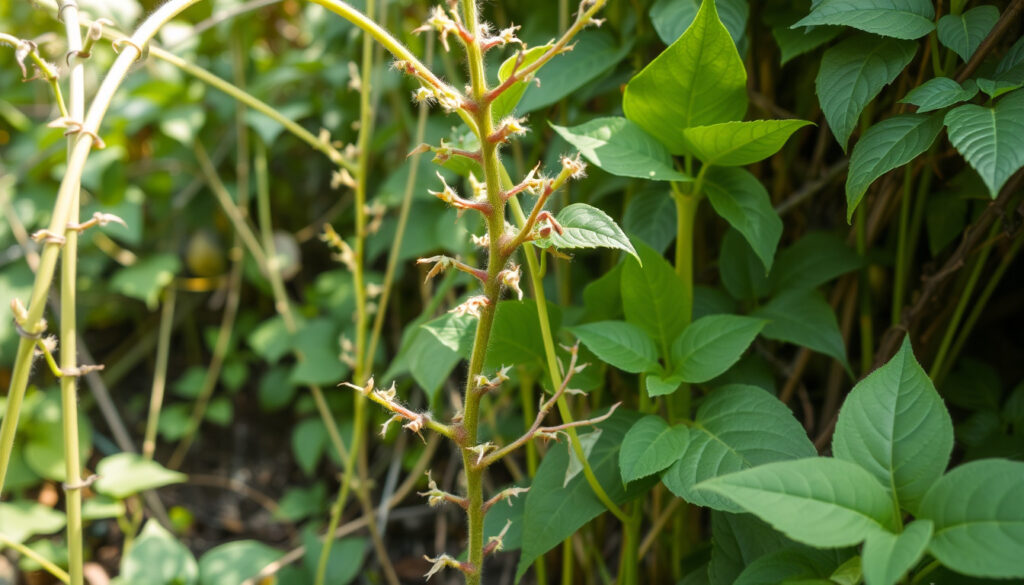
Mistaken Plants That Look Like Japanese Knotweed: Pictures & ID Guide
Spotting Japanese knotweed in your garden can trigger real panic—but research shows that 84% of suspected cases turn out to be harmless lookalikes like bindweed. This guide walks you through the most common confusion plants with practical distinctions, so you can tell what’s actually invasive and what your garden can simply coexist with.
Common Lookalikes: Bindweed, Himalayan balsam, Houttuynia · Expert Sources: RHS, Gardeners World, Environet UK · Key ID Feature: Bamboo-like stems (RHS) · Misidentification Risk: Lilac, Dogwood, Russian vine · Top Confusion: Bindweed (Gardeners World)
Quick snapshot
- Bindweed accounts for 26% of identification photos received (Today’s Conveyancer)
- Himalayan balsam listed as common lookalike (Phlorum, Knotweed Services)
- Lilac mistaken due to spade-shaped leaves (PBA Solutions)
- Exact misidentification frequency across all UK regions
- Regional variation in confusion plant prevalence
- Knotweed introduced to UK around 1825 by Horticultural Society of London (Phlorum)
- Classified invasive under Wildlife and Countryside Act 1981 (Gardeners’ World)
- Environet ID Service data shows bindweed as top misID (2023) (Phlorum)
- Professional survey recommended if knotweed confirmed
- Legal implications under 1981 Act for confirmed infestations
The table below summarises the core diagnostic features for Japanese knotweed against common lookalikes.
| Feature | Description |
|---|---|
| Japanese Knotweed Stems | Bamboo-like, hollow (Bettermove) |
| Leaf Shape | Heart or spade-shaped with flat base |
| Height | Up to 2.5m (Gardeners’ World) |
| Invasive in UK | Yes, under Wildlife and Countryside Act 1981 (Gardeners’ World) |
| Flowers | Creamily white panicles in late summer (Knotweed Help) |
| Growth Pattern | Zig-zag leaf arrangement (Japanese Knotweed.co.uk) |
What plants are mistaken for Japanese knotweed?
Several common garden plants share visual traits with Japanese knotweed, leading to frequent misidentification. The Environet analysis found that bindweed, dogwood, lilac, Russian vine, and even Himalayan balsam regularly fool homeowners and sometimes professionals alike. Understanding these lookalikes matters because only Japanese knotweed carries legal obligations under UK law.
Only 16% of photos submitted to Environet’s free identification service in 2023 showed actual Japanese knotweed. The remaining 84% were harmless plants causing unnecessary worry—or worse, genuine knotweed going undetected.
Bindweed
Bindweed (Convolvulus arvensis) is the most frequently misidentified plant, accounting for 26% of identification photos. Unlike knotweed’s upright bamboo-like stems, bindweed climbs and wraps around other plants with thin, flexible stems that twist in a spiral pattern. Its white or pink trumpet-shaped flowers are unmistakable once blooming, and its heart-shaped leaves are typically smaller than knotweed’s broad shields.
Himalayan Balsam
Himalayan balsam (Impatiens glandulifera) reaches similar heights of up to 2.5m with hollow stems tinted red, creating superficial similarity to knotweed. However, it produces distinctive pink or purple flowers and has thin leaves arranged oppositely along the stem, unlike knotweed’s alternate heart-shaped foliage. It also spreads through explosive seed pods rather than rhizomes.
Houttuynia
Houttuynia cordata was actually the plant Japanese knotweed was initially mistaken for when first introduced around 1825. This groundcover plant grows only to 30cm, has heart-shaped leaves, and produces larger flowers featuring yellow spikes and white bracts—making it fundamentally different in scale from knotweed’s 2.5m clumps.
Lilac
Common lilac shares knotweed’s spade-shaped leaves, leading to confusion especially in early spring when new growth appears. Unlike knotweed’s dense vertical clumps, lilac grows as a woody shrub with fragrant flowers and loses its leaves seasonally. Its stems lack the distinctive bamboo-like segmented structure of knotweed.
Dogwood accounted for 9% of misidentification photos in 2023, often due to its bright red winter stems being confused with knotweed’s purple-flecked canes. Unlike knotweed, dogwood is a permanent woody shrub that doesn’t spread via rhizomes.
How to tell if a plant is Japanese knotweed?
Japanese knotweed (Reynoutria japonica) has several distinctive features that set it apart from lookalikes. Its hollow bamboo-like stems with purple speckles, broad heart or shield-shaped leaves with a flat base, and aggressive rhizome system beneath the soil surface combine to create a plant unlike any harmless garden counterpart. The zig-zag growth pattern of leaves along the stem provides additional identification confidence.
Stem characteristics
Knotweed stems grow upright in dense vertical clusters, reaching 2.5m in height. They resemble bamboo with distinctly segmented nodes and hollow interiors. The stems often display purple speckles or streaks, particularly in spring growth. This upright, non-twining growth pattern distinguishes knotweed from climbing plants like bindweed.
Leaf shape
The leaves are broad and shield-shaped, broader at the base with a flat or slightly curved edge where it meets the stem. This contrasts with bindweed’s more pronounced heart shape and narrower foliage. Leaves arrange alternately along the stem in a zig-zag pattern, a defining characteristic according to Japanese Knotweed.co.uk.
Growth habits
Knotweed dies back completely in winter, leaving brown dead canes, then regrows rapidly in spring from its extensive rhizome system. New shoots emerge red and fleshy before maturing to green. This seasonal die-back and aggressive spring regrowth from underground rhizomes distinguishes it from shrubs like lilac or dogwood that maintain woody structure year-round.
How to tell the difference between bindweed and knotweed?
The distinction between bindweed and Japanese knotweed comes down to growth habit and structural details. Bindweed climbs and wraps around supports in a spiral pattern, while knotweed grows in rigid vertical clumps. Their stems, leaves, and flowers all differ in specific ways that become obvious once you know what to look for.
Grab a stem: if it twists and climbs, it’s bindweed. If it stands rigid and bamboo-like, look closer at leaf shape and flowers to confirm whether you’re dealing with knotweed or another upright plant.
Leaf differences
Bindweed leaves are large and heart-shaped, arranged alternately, but noticeably narrower than knotweed’s shield-shaped foliage. Knotweed leaves have a flat base where they meet the stem—almost like they’ve been sliced straight across. Both plants have alternate leaf arrangements, but the overall leaf shape and size differ significantly.
Stem and growth
Bindweed produces thin, flexible stems that actively seek supports to climb and wrap around. Knotweed stems are thick, hollow, and bamboo-like, growing straight up without any climbing or wrapping behavior. When you see stems spiraling around other plants, you’re looking at bindweed, not knotweed.
Flowers
Bindweed produces unmistakable trumpet or funnel-shaped flowers, typically white with pink tinges. Knotweed flowers are small creamy-white clusters that appear in late summer as panicles up to 10cm across. If you see large trumpet flowers in spring or summer, you’re dealing with bindweed or its cultivated relative morning glory.
What is the difference between persicaria and Japanese knotweed?
Persicaria (also called ornamental bistorts) occasionally confuses property managers unfamiliar with either genus. While both are in the buckwheat family and share some morphological similarities, their growth patterns, sizes, and reproductive strategies differ substantially.
Leaf and stem
Persicaria species typically grow as herbaceous perennials with non-woody stems that die back each year. Knotweed’s stems are more distinctly bamboo-like and can persist as dead brown canes through winter. Persicaria leaves are generally narrower and more lance-shaped than knotweed’s broad shields.
Flowers and height
Persicaria produces distinctive flower spikes—often pink, red, or white—that differ markedly from knotweed’s creamy-white panicles. Most persicaria species reach only 60-90cm, far smaller than knotweed’s 2.5m stature. Ground elder, sometimes grouped with these lookalikes, spreads via rhizomes but produces seeds and has different leaf structures.
Is Himalayan honeysuckle the same as Japanese knotweed?
Himalayan honeysuckle (Leycesteria formosa) shares some visual traits with Japanese knotweed but represents a distinct species with different characteristics. It’s sometimes called “bamboo” in casual garden use, creating understandable confusion with knotweed’s bamboo-like stems.
Visual similarities
Both plants have bamboo-like hollow stems, which explains the visual confusion. Himalayan honeysuckle stems are pale green without the purple speckles characteristic of knotweed. Both die back in winter and regrow from base, though honeysuckle maintains its shrub form rather than expanding aggressively via rhizomes.
Key distinctions
Himalayan honeysuckle produces distinctive pendulous flowers and purple berries that knotweed never shows. Its leaves are more pointed at the tips compared to knotweed’s broader shield shape. Most importantly, Himalayan honeysuckle doesn’t spread aggressively via rhizomes—it’s a well-behaved garden shrub that won’t damage foundations or spread uncontrollably like knotweed.
The implication: homeowners who identify bamboo-like stems without purple speckles or berries can rule out knotweed with confidence.
The table below compares key visual and behavioural traits across the major lookalike species.
| Plant | Height | Stems | Flowers | Spread Risk |
|---|---|---|---|---|
| Japanese Knotweed | Up to 2.5m | Hollow bamboo-like with purple speckles | Creamily white panicles | Extremely high via rhizomes |
| Bindweed | Climbing to 3m | Thin, flexible, twining | Trumpet-shaped white/pink | Moderate via roots |
| Himalayan Balsam | Up to 2.5m | Hollow, red-tinted | Pink/purple | High via explosive seeds |
| Houttuynia | 30cm | Thin, herbaceous | Yellow spikes, white bracts | Low, ground cover only |
| Lilac | Shrub to 4m | Woody, non-hollow | Fragrant purple/white | None |
| Dogwood | Shrub to 3m | Woody, bright red | White clusters | None |
Step-by-step identification guide
Follow these steps in sequence to determine whether you’re looking at Japanese knotweed or a harmless lookalike. Work through each checkpoint before concluding—if you reach step five without ruling out knotweed, seek a professional survey.
Observe the growth habit
Japanese knotweed grows in dense vertical clumps from a central point, with rigid bamboo-like stems reaching 2.5m. If the plant climbs or sprawls rather than growing upright in clumps, it’s likely bindweed or another vine.
Examine the stems
Knotweed stems are hollow, bamboo-like, and often display purple speckles or streaks. Cut or break a stem—if it’s hollow and segmented like bamboo, continue to the next step. Solid or non-segmented stems indicate a different plant.
Check the leaf shape
Knotweed leaves are broad and shield or heart-shaped with a distinctive flat base where they meet the stem. Look for the zig-zag arrangement of leaves along the stem. Bindweed leaves are more narrowly heart-shaped; lilac leaves are more pointed at the tip.
Look for flowers or seeds
Knotweed flowers are small creamy-white clusters appearing in late summer to early autumn. Bindweed shows trumpet-shaped white or pink flowers in summer. Himalayan balsam displays pink or purple flowers. No flowers present? Continue to step five.
Check for rhizome evidence
Japanese knotweed spreads aggressively via rhizomes that can extend 7 meters horizontally and 3 meters deep. If you can see root fragments or have seen aggressive spread despite removal attempts, knotweed becomes more likely. Consider a professional survey at this stage.
Confirmed facts
- Bindweed is the most common misidentification (26% of photos)
- Himalayan balsam listed as top lookalike by multiple specialists
- Lilac confused due to similar spade-shaped leaves
- Dogwood mistaken for knotweed’s red-flecked stems (9% of misIDs)
- Bamboo retains leaves year-round; knotweed loses them in autumn
- Only female knotweed plants imported to UK, making seed spread rare
What’s unclear
- Exact frequency of misidentification across all UK regions
- How often professional surveys reveal different species than homeowner photos
- Regional variation in confusion plant prevalence
Concerned homeowners and gardeners are frequently mistaking common garden plants such as bindweed, dogwood and lilac for highly invasive Japanese knotweed.
— Environet analysis (knotweed removal firm)
It is an offence to plant or cause this species to grow in the wild.
— Wildlife and Countryside Act 1981 (Gardeners’ World)
Related reading: houses for sale UK · building society reviews
Frequently asked questions
What does Japanese knotweed look like when it starts to grow?
In early spring, knotweed emerges as red or purple fleshy shoots that quickly turn green and grow rapidly to 2.5m. New growth appears from underground rhizomes, creating distinctive dense clumps. This early red shoot phase sometimes confuses homeowners with peony or other garden plants that produce similar new growth.
How to confirm no Japanese knotweed?
If a plant climbs, twines, or produces trumpet-shaped flowers, it’s not Japanese knotweed. If stems are woody and don’t hollow like bamboo, it likely isn’t knotweed either. The bamboo-like hollow stems combined with shield-shaped leaves and upright growth in dense clumps are the strongest indicators.
Should you pull up bindweed?
Bindweed is a nuisance weed that competes with garden plants, but unlike Japanese knotweed, it doesn’t carry legal obligations or pose foundation damage risks. It can be pulled or controlled with herbicides without the specialized treatment protocols knotweed requires. Control is advisable for garden health, but there’s no legal requirement to report it.
What do Japanese knotweed flowers look like?
Japanese knotweed produces small creamy-white flowers arranged in clusters (panicles) that can reach 10cm across. Flowers appear from late summer to early autumn, typically August-September. The clusters are airy and delicate, quite different from bindweed’s large trumpet flowers or Himalayan balsam’s showy pink blooms.
What kills Japanese knotweed permanently?
Professional herbicide treatment over multiple growing seasons, excavation with specialist disposal, or deep burial with membrane barriers are the only effective methods. DIY approaches almost never address the rhizome system adequately. UK law requires specialist contractors for legal disposal of knotweed material.
How to book a Japanese knotweed survey?
Contact a PCA (Property Care Association) registered contractor or Environet UK for identification surveys. A formal survey provides documentation required for property sales and mortgage applications. Many surveys are free for initial identification, with treatment quotes following confirmation.
What is Japanese knotweed leaf shape?
Japanese knotweed leaves are broad and shield or heart-shaped with a distinctive flat base where the leaf meets the stem—often described as having a cut-off appearance at the base. Leaves grow alternately in a zig-zag pattern along the stem and can reach 15cm in length.
More related posts
 Virgin Airlines: Status, Owner, Service, and vs BA Guide (2025)
 Allison Janney: Accident, Partner, Sobriety, and More
 Tylor Chase: What Happened to the Former Nickelodeon Star
 Danielle Scott-Haughton Dies: BBC Drama Editor at 37
 Pixie Geldof: Biography, Family, and Career Guide
 Talitha Balinska: Age, Family, Career, and Sam Thompson Rumors
 Wine Tasting Near Me: Rules, Costs & Irish Wineries
 Prince Albert: Life, Death, and Legacy of Queen Victoria’s Consort
