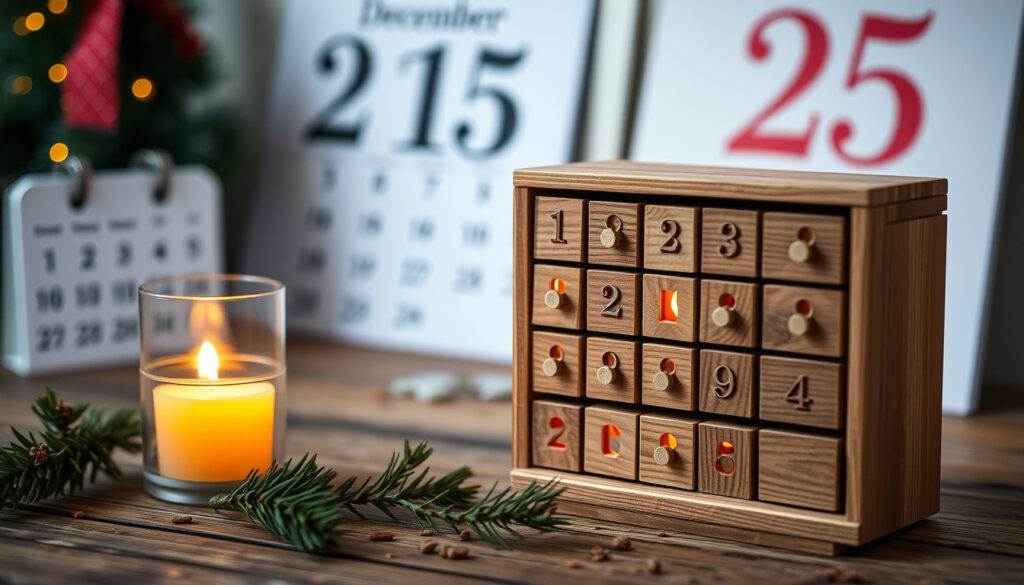
Advent Calendar 2025: Uses, History & Daily Countdown Guide
Few December traditions feel as simple as opening a tiny cardboard door each morning — until you realize that behind that door lies a history stretching back to 19th-century German Lutherans. The Advent calendar has evolved from homemade chalk marks to a global retail phenomenon, with beauty calendars now fetching €300+. Whether you’re counting down to Christmas with chocolate, scripture, or skincare, understanding its origins and rules can make the daily ritual richer.
Origin: 19th century Germany (printed first known in 1908) ·
Traditional start date: December 1 (24 doors) or first Sunday of Advent ·
Original Advent length: 24 days (Dec 1-24) ·
Common contents: Chocolate, toys, beauty samples, scripture verses
Quick snapshot
- Originated in 19th-century Germany (Wikipedia (encyclopedic reference))
- First printed calendar by Gerhard Lang in 1908 (History (UK) (cultural history site))
- 24 doors is the standard count (Wikipedia) (Wikipedia (encyclopedic reference))
- Exact year of the first chocolate calendar (often cited as 1958, not fully verified) (History UK)
- Earliest use of Advent calendar as a marketing tool is undocumented
- Whether the Austrian bookshop calendar (1902) predates Lang’s 1908 version (History UK)
- 19th c. chalk marks → 1908 printed → 1950s chocolate → 2010s beauty → 2025 diverse themes (History (UK) (cultural history site))
- Eco-friendly, personalised photo, and digital calendars gaining traction
Five key facts trace the Advent calendar’s journey from a Lutheran piety tool to a 2025 retail fixture.
| Fact | Value |
|---|---|
| First printed calendar | 1908, by Gerhard Lang in Germany (History UK) |
| Typical door count | 24 or 25 (Wikipedia) |
| Common content | Chocolate, beauty samples, toys, scripture (Wikipedia) |
| Price range (2025) | €5 – €300+ |
| Start date | December 1 or first Sunday of Advent (Wikipedia) |
What is an Advent calendar used for?
Modern uses: daily treat, family tradition
Today, most people use an Advent calendar as a daily countdown to Christmas, opening one door each day from December 1 to December 24. According to Wikipedia, the calendar “counts the days of Advent in anticipation of Christmas.” Families often treat it as a shared morning ritual — a small chocolate or toy that builds excitement day by day.
- Common modern contents: chocolates, small toys, beauty samples, tea bags, or scripture verses (Wikipedia)
- Reusable wooden or fabric calendars allow families to refill them year after year
Religious use: countdown to Christmas
The original purpose was religious. The word “advent” comes from the Latin adventus, meaning “arrival” or “coming,” as noted by History UK. In the 4th and 5th centuries, Advent was a period of prayer, penance, and fasting before baptisms. German Lutherans in the 19th century marked chalk lines on walls or lit candles to count the days. The calendar, according to District Magazine, remains “a season of fasting and contemplation” in Christian tradition.
Marketing use: product discovery
Starting in the 2010s, brands — especially in beauty and luxury — repurposed the Advent calendar as a product-discovery tool. History UK notes that chocolate Advent calendars were commercially produced by Cadbury in 1971. By 2025, beauty calendars from brands like Charlotte Tilbury and Jo Malone sell for €300+ and contain samples worth double the price, making them a promotional vehicle and a retail category of their own.
The Advent calendar’s commercial pivot means shoppers now weigh religious tradition against consumer value. A €5 chocolate calendar offers nostalgia; a €300 beauty box delivers product discovery — but both rely on the same 19th-century countdown format.
What is in an Advent calendar?
Chocolate calendars
The most common type. According to History UK, rumors place chocolate inside Advent calendars in the latter half of the 1950s, and Cadbury began mass production in 1971. Today, chocolate calendars range from supermarket own-brand (€5) to premium Belgian chocolate versions (€30+).
Beauty and makeup calendars
Luxury beauty calendars exploded in the 2010s. Brands like Liberty, Cult Beauty, and Boots offer 24-day boxes with skincare and makeup minis. Prices start at around €50 and exceed €300. These calendars often include full-size products, making them a popular gift and marketing tool.
Toy and experience calendars
For children, LEGO, Playmobil, and Bluey produce calendars with a small toy behind each door. Experience calendars — from gin to cheese to coffee — cater to adults. District Magazine has featured Irish-made calendars, including a food-and-drink version from Dublin producers.
DIY and personalized calendars
Reusable fabric or wooden calendars let users fill each pocket with their own treats, notes, or small gifts. Photo calendars, where each door reveals a family picture, are also popular. These allow complete control over contents and budget.
Pre-filled calendars offer convenience and surprise, but DIY versions avoid waste and suit picky eaters. The catch: refilling 24 pockets requires planning — and restraint not to eat all the chocolates before December 1.
The implication: choose based on your budget and tolerance for curation.
What day do I start my Advent calendar?
Standard start: December 1
Most mass-produced calendars are designed to start on December 1. Wikipedia explains that “many reusable Advent calendars begin on 1 December because the First Sunday of Advent varies between 27 November and 3 December inclusive.” This is the modern default: 24 doors, December 1–24.
Religious start: first Sunday of Advent
Some traditional calendars follow the liturgical calendar, beginning on the fourth Sunday before Christmas. Wikipedia notes that “some Advent calendars begin on the First Sunday of Advent rather than on 1 December.” These calendars may have 22 to 28 doors depending on the year.
For 25-door calendars: start November 30 or December 1
A handful of calendars include a door for Christmas Day (December 25). These often start on November 30 or December 1. Always check the package instructions — the manufacturer sets the first door’s date.
The implication: if you buy a standard commercial calendar, start December 1. If you follow a faith-based tradition, check the Advent Sunday date for your year and diocese.
What are the rules of an Advent calendar?
Open one door per day
The cardinal rule. Each day, from December 1 (or the designated start), you open one door. Wikipedia confirms that “the calendar doors are commonly opened daily leading up to Christmas Eve on 24 December or Christmas Day on 25 December.” Breaking the sequence — skipping ahead — defeats the countdown purpose.
Do not skip ahead
For children especially, peeking behind future doors can be tempting. Parents often enforce a “no cheating” rule to preserve daily excitement. For adults, it’s self-discipline: the ritual is the point.
Share or use individually
There are no strict rules about sharing. Families often take turns opening the door and splitting the contents. Personal calendars (e.g., beauty) are typically for one person. The only rule that matters: enjoy the countdown.
What is the history of the Advent calendar?
19th century Germany: homemade chalk marks
The tradition of marking the days until Christmas likely started in 19th-century Germany. History UK reports that “the Advent calendar was first used by German Lutherans in the 19th and 20th centuries.” Families would draw chalk lines on the wall or light candles — one per day.
1908: first printed calendar (Gerhard Lang)
Gerhard Lang, a German publisher, is widely credited with producing the first printed Advent calendar in 1908. History UK calls him “a strong contender for the title of inventor.” A competing claim involves an Austrian Protestant who sold calendars from his bookshop in 1902.
Post-WWII popularization
After World War II, Richard Sellmer began exporting printed Advent calendars with snowy winter scenes in 1946. According to History UK, his company “still produces more than one million Advent calendars a year in 25 countries.” Chocolate calendars appeared in the 1950s, with Cadbury starting commercial production in 1971.
2025: global market with diverse themes
In 2025, the market includes everything from eco-friendly wooden calendars to digital versions with online reveals. Ireland has its own niche: District Magazine showcases Irish-made calendars, and Heritage Ireland launched a “Heritage Advent Calendar” on its Facebook page for Christmas 2025.
How to Use an Advent Calendar: Step-by-Step
Whether you’re a first-timer or a seasoned calendar owner, here’s a simple routine.
- Step 1: Choose your calendar type — chocolate, beauty, toy, DIY, or religious — and confirm the start date (usually December 1).
- Step 2: Place the calendar in a visible spot where you’ll remember to open it each day.
- Step 3: Starting on the designated first day, open door number 1. Do not skip ahead.
- Step 4: Enjoy the contents (eat the chocolate, try the sample, read the verse).
- Step 5: Repeat daily until December 24 or 25. If the calendar is reusable, save the packaging to refill next year.
The catch: the best calendar is the one you actually open every day.
Timeline: Key moments in Advent calendar history
- 19th century — German Lutherans mark chalk lines or light candles to count Advent days (History UK).
- 1908 — Gerhard Lang produces first printed Advent calendar (History UK).
- 1940s–1950s — Chocolate Advent calendars introduced after WWII (History UK).
- 1971 — Cadbury begins commercial production of chocolate calendars (History UK).
- 2002 — Wikipedia article “Advent calendar” created (Wikipedia (encyclopedic reference)).
- 2010s — Beauty and luxury Advent calendars become popular (History UK).
- 2025 — Market includes beauty, toys, food, personalised photo, and eco-friendly versions (District Magazine).
The timeline shows a shift from private piety to public commerce.
Confirmed facts
- Advent calendar originated in 19th-century Germany (Wikipedia)
- First printed by Gerhard Lang in 1908 (History UK)
- 24 doors is standard (Wikipedia)
- Chocolate calendars sold from 1950s (History UK)
What’s unclear
- Exact year of first chocolate calendar (often cited as 1958, not fully verified) (History UK)
- Earliest use of Advent calendar as a marketing tool
- Whether the Austrian bookshop calendar (1902) predates Lang’s 1908 version (History UK)
Expert perspectives
“An Advent calendar is used to count the days of Advent in anticipation of Christmas.”
— Wikipedia (encyclopedic reference)
“Gerhard Lang is described as a strong contender for the title of inventor of the Advent calendar.”
“Advent is the stretch leading up to Christmas and a season of fasting and contemplation in Christian tradition.”
The Advent calendar’s journey from Lutheran chalk marks to a €300 beauty box captures a larger cultural shift: tradition commodified. For Irish shoppers eyeing a 2025 calendar, the choice is clear: decide on your budget and values (chocolate, beauty, or heritage) before November, or risk scrolling through sold-out signs.
facebook.com, etsy.com, thespiritco.com, youtube.com, bakomkulisserna.se
For those specifically interested in confectionery options, our chocolate advent calendar buying guide covers the best chocolate calendars available in the UK for 2025.
Frequently asked questions
Can I reuse an Advent calendar?
Yes. Reusable fabric, wooden, or magnetic calendars can be refilled each year with new treats, notes, or small gifts. This is both economical and eco-friendly.
Are Advent calendars only for children?
No. Adult-focused calendars (beauty, gin, cheese, coffee, tea) are widely available. Many luxury beauty calendars are marketed exclusively to adults.
What is an Advent calendar made of?
Traditional calendars are made of cardboard or paper. Modern versions use wood, fabric, metal, or even acrylic. The inner compartments can be filled with any small item.
How many days in Advent?
Advent lasts 24 days (December 1–24) in modern commercial calendars. In the liturgical calendar, it varies from 22 to 28 days depending on the year, starting on the fourth Sunday before Christmas.
Do Advent calendars have religious meanings?
Originally yes — they count down Advent, a season of fasting and contemplation before Christmas. Many modern calendars are secular, but religious versions with Bible verses or nativity scenes remain available.
Where can I buy an Advent calendar in Ireland?
Irish retailers include Boots, Notino, Brown Thomas, and local artisan producers. District Magazine has featured Irish-made calendars from Dublin food and drink producers.
Are there vegan Advent calendars?
Yes. Many brands now offer vegan chocolate calendars, and DIY calendars can be filled with any vegan treats. Check labels for dairy-free chocolate and gelatine-free sweets.
More related posts
 Most Expensive LEGO Set Ever: Top 10 Ranked by Value
 Grace Van Patten: Biography, Relationships, and Career Facts
 JFK Jr.: Life, Death, and the Unanswered Questions
 Ben Hardy: Biography, Career, and Why He Left EastEnders
 Derek McInnes: Hearts Commitment, Trophies, and Career Facts
 Nathalie Emmanuel: Biography, Age, Ethnicity, Movies, and More
 Left Side Stomach Pain – Causes and When to Worry
 Manchester United F.C. vs Athletic Bilbao – Complete Match Guide
