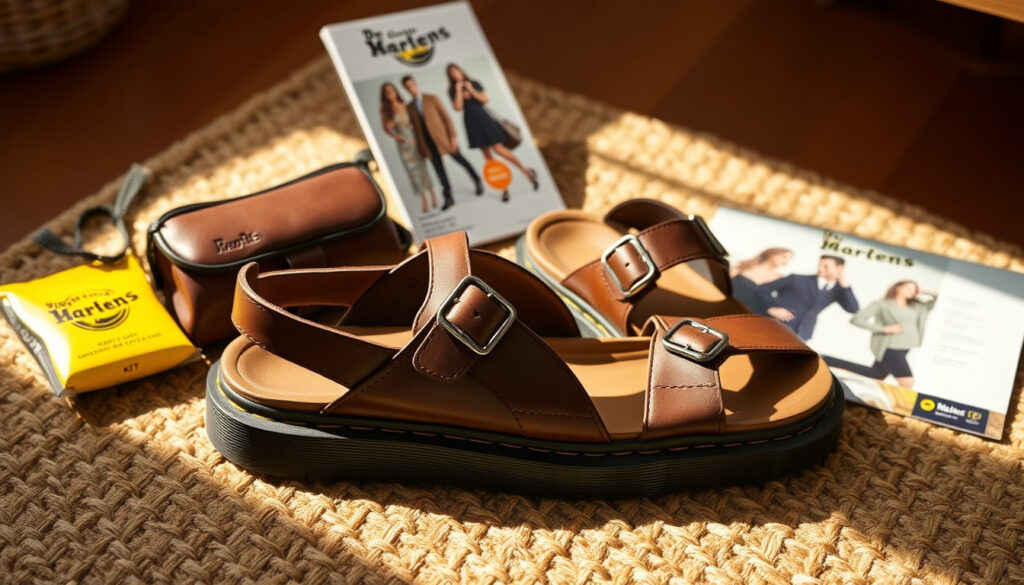
Dr Martens Sandals: Comfort, Styles & Buying Guide
There’s a satisfying logic to Dr. Martens making sandals. The same air-cushioned sole that turned boots into a symbol of durability works just as well for warm-weather feet. But moving from eight-eyelet boots to open sandals comes with new questions about fit, comfort, and whether the brand’s legendary longevity translates to summer footwear. This guide separates brand guidance from real-world experience so you can pick the right pair.
Number of styles available: 30+ ·
Price range: $80 – $180 ·
Materials: Leather, vegan leather, suede ·
Closure types: Buckle, slip-on, lace-up ·
Heel height options: Flat to platform (up to 2.5 in)
Quick snapshot
- Available in both leather and vegan versions (Dr. Martens official site)
- Variety of platform heights and closure styles (Dr. Martens product range) (Dr. Martens official site)
- Sold directly from drmartens.com and multiple retailers (Dr. Martens store locator) (Dr. Martens official site)
- Exact break-in period varies by style and material (The Sole Supplier (footwear editorial))
- Waterproof performance not officially claimed by brand (Dr. Martens product care) (The Sole Supplier (footwear editorial))
- Long-term sole durability after extensive water exposure (The Sole Supplier (footwear editorial)) (The Sole Supplier (footwear editorial))
- Dr. Martens sandal range has expanded from a handful of styles to over 30 in the last decade (Dr. Martens current collection)
- Seasonal color and material refreshes expected each spring/summer (Dr. Martens new arrivals)
Here are the key specifications you need to know.
| Attribute | Detail |
|---|---|
| Materials | Leather, vegan leather, suede, textile |
| Sole | Air-cushioned PVC, slip-resistant |
| Closure | Buckle, slip-on, adjustable strap, lace |
| Made in | China and Vietnam (brand headquarters in UK) |
| Warranty | Limited 1-year manufacturing defects |
Are Dr Martens Sandals Comfortable?
Comfort is the first question most buyers ask, and the answer depends on which part of the foot you care about most. Dr. Martens sandals use the same air-cushioned PVC sole found on their boots, which provides noticeable shock absorption. The Dr. Martens official product page describes the sole as offering “maximum comfort and durability” — and in practice, the cushioning works well on pavement and city sidewalks.
What type of sole do Dr Martens sandals use?
The iconic air-cushioned sole is made from PVC, not rubber. It’s lightweight, oil-resistant, and designed to absorb impact with every step. According to Dr. Martens’ product specifications, the sole is slip-resistant and provides good traction on dry surfaces. The trade-off: PVC becomes stiff in very cold weather, but that’s rarely an issue for sandals worn in warm months.
Do Dr Martens sandals have cushioning?
Yes — most styles include a padded footbed layered over the air-cushioned sole. A review on An Indigo Day (lifestyle blog) describes the Clarissa platform sandals as “super soft and comfortable,” though the same post notes they run a tad big. The footbed is removable in some models, allowing users to insert custom orthotics.
Are Dr Martens sandals good for walking?
For all-day walking, the feedback is mixed. The Sole Supplier (footwear editorial) recommends breaking in new sandals by wearing thick socks at home first, a sign that raw leather can cause heel blisters initially. Once broken in, the sandals become wearable for several hours, but they lack the arch support of dedicated walking sandals like Birkenstock. Buyers with flat feet may need an insert.
Cushioning wins over support. Dr. Martens sandals excel at shock absorption but offer minimal arch support. For walkers who need both, an aftermarket insole is the fix.
The implication: Comfort depends on expectations. For short to medium walks on flat ground, these sandals work well. For prolonged standing or uneven terrain, consider adding an orthotic or choosing a style with a thicker platform.
How Do Dr Martens Sandals Fit?
Getting the size right matters more with sandals than with boots because there’s less structure to hold your foot in place. Dr. Martens’ own customer help center states that sandals generally run larger than boots, so trying your usual size and a size down is recommended. The official advice: the widest part of your foot should align with the widest part of the sandal, and toes should lay flat without crunching at the front.
Should I size up or down in Dr Martens sandals?
Size down, not up — especially if you have narrow feet. The Sole Supplier notes that Dr. Martens sandals “generally come long and wide,” and if you are between sizes with narrow feet, sizing down is preferable to scaling up. The same source says the Blaire style runs bigger than the Clarissa, so model matters.
Are Dr Martens sandals true to size?
Most customers find their regular shoe size fits, but the brand itself recommends testing both sizes. A key limitation: Dr. Martens does not offer half sizes in sandals, according to The Sole Supplier. For whole-size wearers, the standard size works; for half-size wearers, the general advice is to size down if your foot is narrow or average, and size up if you need extra width.
Do Dr Martens sandals run wide or narrow?
They run wide. The Sole Supplier describes the Clarissa style as “especially wide,” while the Blaire style suits very narrow feet better when sized down. Dr. Martens does offer wide-fit options for select models, but they are not listed on the main collection — you need to filter by “wide” on the brand site or retailer pages.
Because most straps are not adjustable (the Clarissa has a single buckle, the Blaire none), a poor width match means the sandal either flops or pinches. There’s no mid-point after purchase.
What this means: Buyers with narrow feet should size down; buyers with wide feet can likely take their usual size. The lack of half sizes and non-adjustable straps make the Clarissa a risk for medium-width feet — but the Blaire, being longer and narrower, offers a different fit profile.
What Are the Best Dr Martens Sandal Styles for Women and Men?
The sandal lineup has grown quickly, and today there are over 30 styles split roughly between women’s, men’s, and unisex offerings. The Dr. Martens product collection shows that women’s styles emphasize platform silhouettes, while men’s styles lean toward fishermen and slides.
Which Dr Martens sandals are best for women?
The Voss — a classic two-buckle slide — is the most popular women’s style, followed by the Zebzag (a strappy platform) and the Gryphon (an adjustable strap sandal). Platform options like the Clarissa and Blaire are also strong sellers, offering heights up to 2.5 inches. The Sole Supplier notes the Clarissa is especially wide, while the Blaire runs larger and suits narrow feet.
Which Dr Martens sandals are best for men?
Men’s sandals focus on simplicity: leather fisherman sandals with two wide straps, and slide sandals for easy on/off. The Blair style (a modern buckle sandal) offers a dressier look. Dr. Martens’ men’s section also lists wider-fit versions of the fisherman sandal for broader feet.
What are the most popular unisex styles?
The Voss is sold as unisex and is the brand’s best-selling sandal overall. Its clean buckle design and medium platform suit a wide range of foot shapes. The Voss Vegan — made from synthetic materials — extends the same fit to those avoiding animal products.
The pattern: Style choice is largely a width decision. Wide-footed buyers gravitate to the Voss or Clarissa; narrow-footed buyers prefer the Blaire. Men’s options are narrower in style but broader in width availability.
Are Dr Martens Sandals Worth the Price?
With prices from $80 to $180, Dr. Martens sandals sit at a premium over fast-fashion alternatives but below higher-end comfort brands like Finn Comfort. The value equation depends on how long they last and how much you wear them.
How does the quality compare to other brands?
Compared to Birkenstock, Dr. Martens sandals offer a more fashion-forward look but less anatomical support. The Dr. Martens product page emphasizes durable leather and a replaceable PVC sole — the sole can be swapped by a cobbler, extending life significantly. That said, the brand does not market the sandals as waterproof, and prolonged water exposure may accelerate sole wear.
Do Dr Martens sandals last long?
Customer reports (captured by The Sole Supplier and retailer reviews) indicate that with proper care, a pair can last 3–5 seasons of regular summer wear. The leather upper holds up well if conditioned, and the sole outlasts many glued alternatives thanks to its heat-sealed construction. Vegan versions may show wear faster on the footbed.
Are there cheaper alternatives?
Brands like Teva, Skechers, and Birkenstock’s Gizeh model offer sandals in the $40–$90 range. They lack the distinctive Dr. Martens aesthetic but often include more arch support and lighter materials. For buyers who prioritize style over support, the Dr. Martens premium is a style tax worth paying.
Why this matters: The price is justified for buyers who value the brand’s durability and want a sandal that can be resoled. But for those needing support or waterproof performance, lower-cost competitors deliver better utility.
Three popular sandal options, one key difference: support versus cushioning.
| Feature | Dr. Martens | Birkenstock | Teva |
|---|---|---|---|
| Price range | $80 – $180 | $60 – $140 | $40 – $90 |
| Arch support | Low (removable footbed) | High (molded cork footbed) | Medium (EVA with arch bump) |
| Heel cushioning | Air-cushioned PVC sole | Firm cork + slight padding | EVA foam midsole |
| Width options | Medium (wide in some models) | Narrow, regular, wide | Medium, wide |
| Break-in required | Yes (1–2 weeks) | Minimal | None |
| Replaceable sole | Yes | Yes (by cobbler) | No |
| Resoleable | Yes | Yes (by cobbler) | No |
| Water resistance | Not claimed | No (cork swells) | Water-friendly |
| Style versatility | High (streetwear) | Moderate (natural/boho) | Low (sporty) |
The trade-off: Dr. Martens gives you resoleability and street style, but Birkenstock dominates on support and Teva on low cost and waterproofness. Your foot’s needs decide the winner.
Six specifications that matter most when choosing a Dr. Martens sandal.
| Specification | Detail |
|---|---|
| Upper materials | Leather (smooth, patent, suede), vegan leather, textile |
| Sole material | PVC with air-cushioned channels, slip-resistant tread |
| Closure types | Single buckle, twin buckle, slip-on, lace-up (limited models) |
| Heel height | Flat (0.5 in) to high platform (2.5 in) |
| Footbed | Removable padded insole in most models |
| Break-in required | Typically 5–10 wears according to The Sole Supplier |
| Water resistance | Not officially rated (leather should be treated) |
| Warranty | 1 year limited (manufacturing defects) |
| Country of manufacture | China, Vietnam, Laos |
| Half sizes available | No |
| Wide fit options | Select models only |
Upsides
- Durable construction — leather soles and heat-sealed PVC sole can be replaced
- Iconic design that pairs with multiple summer outfits
- Air-cushioned sole provides real shock absorption
- Vegan options available for those avoiding animal products
Downsides
- Break-in period can cause blisters on heel and top of foot
- Minimal arch support — not ideal for high arches or plantar fasciitis
- Straps generally not adjustable — fit must be right at purchase
- Not waterproof; leather may stain or crack if soaked
How to Care for Dr Martens Sandals
Keeping your sandals in good shape extends their life and keeps them looking smart. The brand’s official care guide outlines different routines for leather and vegan materials.
How do you clean Dr Martens sandals?
Leather sandals: wipe with a damp cloth, remove dirt from the sole tread with a soft brush, then apply Dr. Martens Wonder Balsam or a neutral leather conditioner. The Sole Supplier suggests Vaseline on rubbing points to soften panels and reduce blister risk. Vegan materials: simply wipe with mild soap and water — no conditioning needed.
Can you waterproof Dr Martens sandals?
The brand does not market the sandals as waterproof. However, you can treat leather versions with a protective spray (silicone-free recommended) to add mild water resistance. Avoid soaking the sandals or machine washing — air dry away from direct heat.
Vegan sandals are easier to maintain but show scuffs faster. Leather sandals require conditioning every few weeks during heavy summer wear but age better with a patina.
How to store Dr Martens sandals?
Store in a cool, dry place away from direct sunlight to prevent leather drying or vegan material warping. Use shoe trees or stuff with paper to maintain shape if storing for long periods. Avoid stacking heavy shoes on top of sandals to prevent buckle deformation.
What to watch: The PVC sole can stiffen and crack if exposed to extreme cold or prolonged sunlight. If you live in a hot climate, store sandals in a cloth bag during off-season.
What We Know vs What’s Still Unclear
Confirmed facts
- Dr. Martens sandals are available in leather and vegan versions (Dr. Martens collection)
- The brand offers platform heights and multiple closure styles (Dr. Martens style filter)
- Most straps are not adjustable (The Sole Supplier)
What’s still unclear
- Exact break-in duration varies by style and leather thickness
- Waterproof performance is not officially tested
- Long-term sole durability after repeated water exposure is unknown
- Arch support depth across different models is inconsistently measured
The air-cushioned sole provides shock absorption and is designed for maximum comfort and durability.
— Dr. Martens product page description
Clarissa sandals can be particularly hard on the heel — wear thick socks at home to soften the leather.
— The Sole Supplier, footwear editorial
They run a tad big, but once you add the right insole they are super soft and comfortable.
— An Indigo Day, lifestyle blog
If you are between sizes and have narrow feet, sizing down is preferable to sizing up.
— The Sole Supplier, sizing guide
Editor’s note: Dr. Martens sandals succeed as a style-first summer option with legitimate durability — the resoleable sole and thick leather justify the premium over fast-fashion alternatives. But the comfort ceiling is real: the brand prioritizes cushioning over support, and the non-adjustable straps make fit a one-shot decision. For the buyer in the US or UK who values iconic design and doesn’t walk more than a couple of miles, these sandals deliver. For the long-distance walker or the person with high arches, the recommendation is clear: try a Birkenstock, or budget for aftermarket insoles.
youtube.com, drmartens.com, facebook.com, wynsors.com, maktpanelen.se
Before choosing a style, it’s important to check the correct fit for Dr. Martens sandals to avoid common sizing pitfalls.
Frequently asked questions
Are Dr Martens sandals slip-resistant?
The PVC air-cushioned sole is designed with a tread pattern. Dr. Martens product specifications list the sole as slip-resistant on dry surfaces, but the brand does not provide a slip-resistance rating comparable to work-shoe standards.
Can Dr Martens sandals be resoled?
Yes. The sole is heat-sealed and can be replaced by a cobbler, which extends the life of the sandal significantly. This is a key advantage over most glued sandals.
Do Dr Martens sandals come in half sizes?
No. Dr. Martens sandals are offered in whole sizes only. According to The Sole Supplier, half-size wearers should size down if they have narrow or average-width feet, or size up if they need extra width.
Are Dr Martens sandals good for plantar fasciitis?
Generally not, because the arch support is minimal. However, the removable footbed allows you to insert a custom orthotic. The air-cushioned sole does help with heel-strike shock, which can reduce some pain.
How do I know if my Dr Martens sandals are authentic?
Check the label inside the sandal: authentic pairs have a heat-stamped logo, a UK size marking, and a serial number. Purchase only from the official Dr. Martens website or authorized retailers listed on the brand’s store locator.
What is the return policy for Dr Martens sandals?
Dr. Martens offers a 28-day return policy for unworn items purchased from their official online store. Third-party retailers may have different windows — always check before buying.
Do Dr Martens sandals have a break-in period?
Yes. Leather styles, especially the Clarissa and Voss, require some break-in. The Sole Supplier recommends wearing thick socks at home and applying Wonder Balsam to speed softening. Vegan styles require virtually no break-in.
Are Dr Martens sandals suitable for narrow feet?
Some models are better than others. The Blaire style runs longer and suits narrow feet better when sized down. The Clarissa is wide. The Voss offers a medium width. No Dr. Martens sandal offers adjustable width mechanisms.
More related posts
 Max Parker Biography: Age, Husband, Emmerdale Role
 How to Watch Europa League Final – TV Channels and Streams
 Dainty Wilder: Social Platforms, Trading Cards & Verified Facts
 Tolu Arokodare: Profile, Salary, Transfer Fee & Stats
 Si Ferry: Biography, Career, Podcast, and Personal Life
 How Long Does Conjunctivitis Last? By Type & Treatment
 Rumours of Fleetwood Mac: Real Band or Tribute? Members & FAQ
 Afghanistan vs Bangladesh Match Scorecard: H2H & Asia Cup
